
































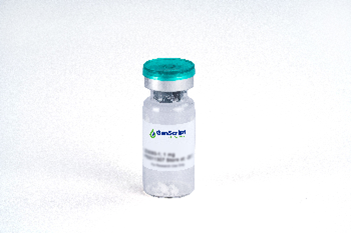
PD-1 Fc Chimera, Mouse
| $120.00 | |
| Z03383-50 | |
|
|
|
|
|
|
|
|
|
| Ask us a question | |
IVD Raw Materials
| $120.00 | |
| Z03383-50 | |
|
|
|
|
|
|
|
|
|
| Ask us a question | |
| Species | Mouse | ||||
| Protein Construction |
|
||||
| Purity | > 95% as analyzed by SDS-PAGE | ||||
| Endotoxin Level | < 1 EU/μg of protein by gel clotting method | ||||
| Expression System | HEK 293 | ||||
| Apparent Molecular Weight | ~61.7 kDa, on SDS-PAGE under reducing conditions. | ||||
| Formulation | Lyophilized from a 0.2 μm filtered solution in PBS. | ||||
| Reconstitution | It is recommended that this vial be briefly centrifuged prior to opening to bring the contents to the bottom. Reconstitute the lyophilized powder in ddH₂O or PBS up to 100 μg/ml. | ||||
| Storage & Stability | Upon receiving, this product remains stable for 6 months at lower than -70°C. Upon reconstitution, the product should be stable for 1 week at 4°C or for 3 months at -20°C. For long term storage it is recommended that a carrier protein (example 0.1% BSA) be added. Avoid repeated freeze-thaw cycles. |
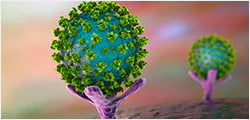
| Target Background | Programmed cell death protein 1, also known as PD-1 and CD279 (cluster of differentiation 279) or PDCD1, is a protein that in humans is encoded by the PDCD1 gene. PD-1 is a cell surface receptor that belongs to the immunoglobulin superfamily and is expressed on T cells and pro-B cells.PD-1 binds two ligands, PD-L1 and PD-L2. PD-1 and its ligands play an important role in down regulating the immune system by preventing the activation of T-cells, which in turn reduces autoimmunity and promotes self-tolerance. The inhibitory effect of PD-1 is accomplished through a dual mechanism of promoting apoptosis (programmed cell death) in antigen specific T-cells in lymph nodes while simultaneously reducing apoptosis in regulatory T cells (suppressor T cells). |
| Synonyms | PDCD1; CD279; PD1; SLEB2; hPD-1; hPD-l; hSLE1; Programmed cell death 1 |
For laboratory research use only. Direct human use, including taking orally and injection and clinical use are forbidden.