











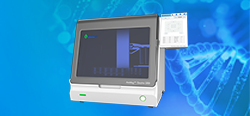


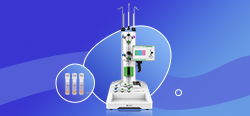




















Meet the AIDD Agent
Gateway to faster validation decisions.

Assay Strategies Validation Workflow Planning Proposal Requests Project Tracking
AI models move fast. Validation shouldn’t be the bottleneck.

Speed

Sequence-to-data packages in as fast
as 4 calendar days

Scale

Industrial-scale
screening, 4000+
designs/day

AI-Ready Data

Structured datasets
for model training &
decision-making

Industrialized validation engine
that converts AI designs into
reliable AI-ready data

20M+

AI-Ready Data Points Generated per Year

600K+

AI-Designed Proteins Expressed per Year

<$10

Per AI-Ready Data Point

3500+

Global Partner Organizations

260K+

Proteins Assayed
per Year

One Validation Engine.
Multidimensional
Workflow.

Each design routed to the right build, expression, assay, and data workflow based on modality, stage, and decision need.

Step 01
Intake

AI-designed sequences, sample metadata, target information, and decision criteria.

Step 02
Build

Gene synthesis, DNA template, cloning, and expression-ready construct optimization.

Step 03
Express

TurboCHO™ mammalian or cell-free system, modality-optimized expression route.

Step 04
Test

High-throughput binding, kinetics, developability, and functional assay options.

Step 05
AI-Ready Dataset

Raw and processed data, metadata, risk assessment heat maps and API-ready datasets for model feedback.

Seq2data Validation Solutions
Tailored to Any Discovery Workflow

Select the validation package that matches your
timeline, data needs, and candidate stage.

Priority: Speed

Rapid Screening Package | 4 Days

Best for: Quickly narrowing large AI-designed libraries

  • Sequence-to-data in as fast as 4 calendar days
  • Best-fit for VHHs and miniproteins
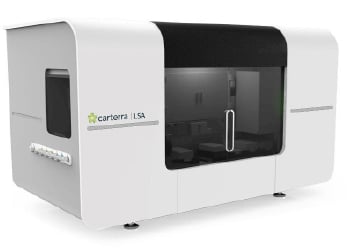
  • 384-well cell free expression & LSA affinity ranking assay
  • Output: Structured affinity binding dataset for rapid candidate prioritization
Priority: Data Depth

Full Developability Package | 7-10 Days

Best for: Selecting lead candidates and improving model performance

  • Ideal for IgG, bispecific antibody, VHH, enzymes, miniproteins, and custom protein formats
  • AI-informed codon optimization and high-throughput gene synthesis
  • TurboCHO™ mammalian, E.coli, or cell-free expression
  • 10+ high-throughput binding and developability assays. 2-day turnaround for any combination. Scalable to 4000/day.
  • Output: API/AI-ready datasets delivery with dedicated digital support

Express Each Protein Modality the Right Way

Antibodies

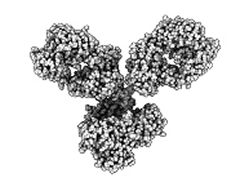
AI is revolutionizing antibody engineering by precisely designing CDR loops, optimizing affinity, and enhancing developability for complex therapeutic targets.

Recommended Platforms

Mammalian (CHO):
Essential for complex folding and critical glycosylation. HTP screening at 2,000 samples/day(1mL) with a 5 BDs TAT.

Nanobodies
(VHH)

With their simple, stable structure, VHHs are ideal targets for AI-driven de novo design, enabling rapid screening cycles for your computational libraries.

Recommended Platforms

Cell-Free: 
Offers maximum speed & throughput for rapid screening of AI libraries. 2,000 samples/day (1mL/5mL) with a 4-day TAT.

E. coli: 
Provides higher yield for validation and a clear path to scale-up. 500 samples/day (4mL) with a 1-2 week TAT.

De Novo Proteins &
Protein Binders

AI-driven de novo protein unlocks therapeutic potential by creating novel protein scaffolds and mini-binders precisely engineered to engage difficult drug targets.

Recommended Platforms

Cell-Free: 
Enables high-throughput screening of novel scaffolds for generative AI. 2,000 samples/day (1mL/5mL) with a 4-day TAT.

E. coli:
Enables higher-yield expression for robust validation and future scale-up. 500 samples/day (4mL) with a 1-2 week TAT.

Enzymes

AI-powered enzyme engineering, whether through de novo design or directed evolution, requires rapid, high-throughput validation of catalytic activity and stability.

Recommended Platforms

Cell-Free: 
The fastest platform for in vitro activity screening of AI-designed variants. 2,000 samples/day (1mL/5mL) with a 4-day TAT.

E. coli:
Standard for higher-yield validation and proven scalability. 500 samples/day (4mL) with a 1-2 week TAT.

2-Day Binding & Developability Data

Affinity Binding
  • Affinity Ranking (Carterra LSA, BLI, SPR 1-pt)
  • Full KD (Carterra LSA, BLI, SPR 5-pt KD)
  • Cell-based Binding FACS
Biophysical Assays
  • Stability (nanoDSF)
  • Stability (DLS)
  • Stability (SLS)
  • Solubility (HIC-HPLC)
  • Solubility (PAIA-HIC)
  • Aggregation (AC-SINS)
Polyspecificity & Others
  • BVP ELISA
  • DNA ELISA
  • Insulin ELISA
  • OVA ELISA
  • PAIA-OVA
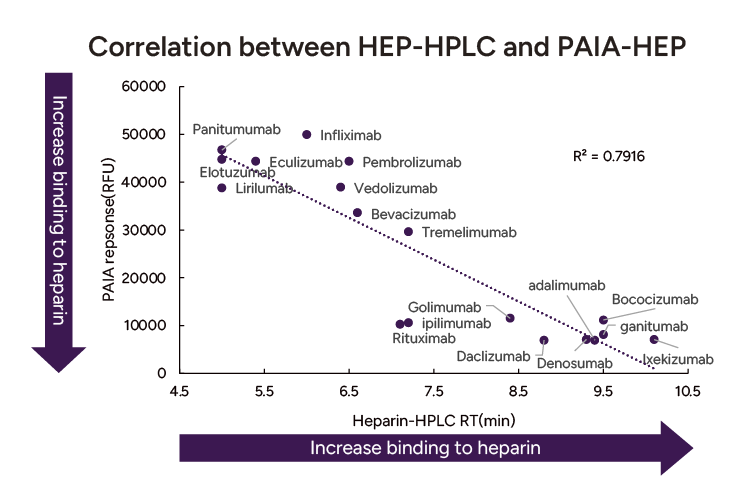
  • PAIA-HEP
  • FcRn Binding – pH 6.0

Decision-Ready Data Package

Raw Data
Instrument output, curves,
assay readouts
Processed Data
Rankings, KD values, QC
summary, flags
Metadata
Sequence ID, sample ID, target,
expression route, assay condition
Delivery
Standardized table, API-ready
export, ELN/LIMS-ready format

Less
Information

Case Studies

  • 178 AI-Designed GFPs Expressed & Assayed in 8 Days via E. coli HTP Platform

    3 Days

    Gene
    Synthesis

    1 Day

    Protein
    Expression

    4 Days

    Assay
    Screening
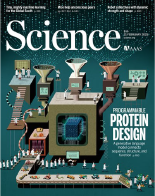
    GenScript confirmed the functionality of ESM3's AI-designed esmGFP - a novel protein created by simulating 500 million years of evolution - through high-throughput E. coli expression.

    We delivered expression and assay services for 178 AI-generated GFP variants in just 8 business days, setting a new benchmark for rapid validation of computationally designed proteins.

    Featured on the cover of Science’s February issue in 2025.
    Hayes, Thomas, et al. Simulating 500 Million Years of Evolution with a Language Model. Science387,850-858(2025).
    https://www.science.org/doi/10.1126/science.ads0018
  • The Challenge

    Latent Labs needed to experimentally validate their Latent-X AI model, which designed 100 de novo mini-binders against five different therapeutic targets. They required a "build and test" partner to translate these digital designs into functional in vitro binding data at scale.

    The Solution:
    GenScript's "Build & Test" Platform

    GenScript provided an end-to-end service to bridge the in silico to in vitro gap.

    Build:

    GenScript synthesized and codon-optimized 100 mini-binder designs for each target using Cell-Free expression. Key target proteins (BHRF1, MDM2, MCL-1) were produced via GenScript's E. coli expression service.

    Test:

    All binding analysis was performed by GenScript on an Octet RED3844. This included HT-BLI for rapid screening of all 100 designs per target and 5-concentration BLI for precise affinity determination.

    The Outcome

    GenScript's platform provided the core in vitro data that validated the Latent-X AI model. The results confirmed high experimental hit rates (e.g., 64% on BHRF1 ) and potent, high-affinity binders in the low-nanomolar to picomolar range, proving the model's superior performance.

    Preprint: "Latent-X: An Atom-level Frontier Model for De Novo Protein Binder Design"

    https://doi.org/10.48550/arXiv.2507.19375

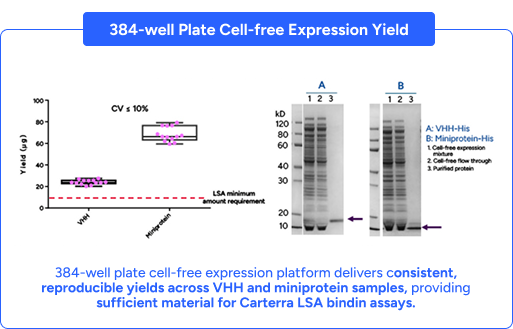
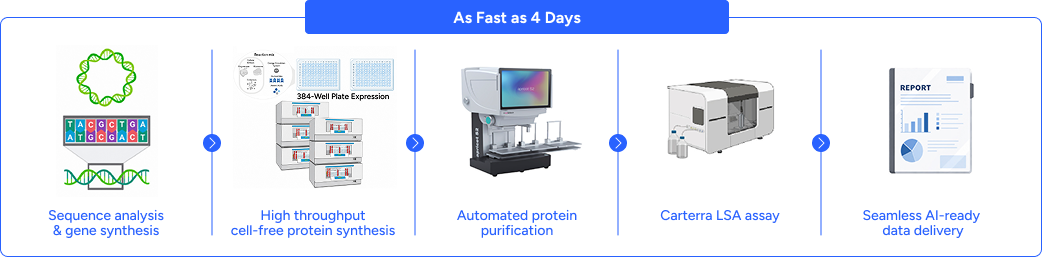
  • Cell-Free 4-Day Cycle for AI-Ready Dataset through 384-Well Plate Expression

    Fast and Reliable Workflow

    GenScript’s 4-day integrated sequence-to-data process enables rapid, consistent validation of AI-generated sequences at scale.

    Controlled Variability

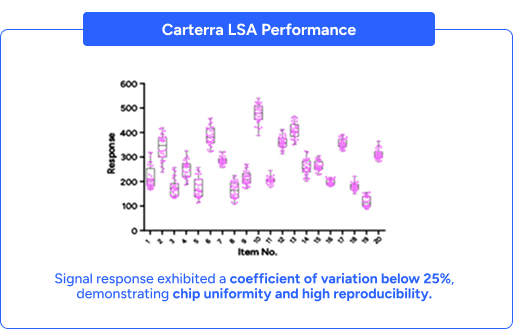
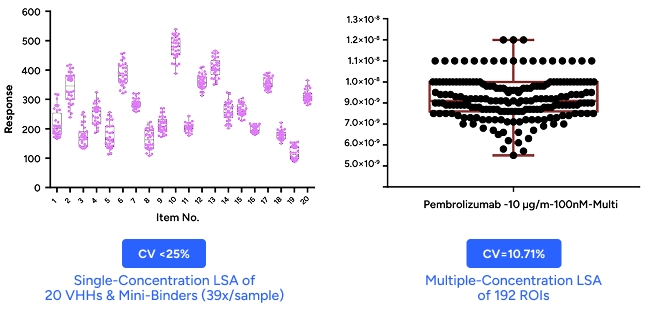
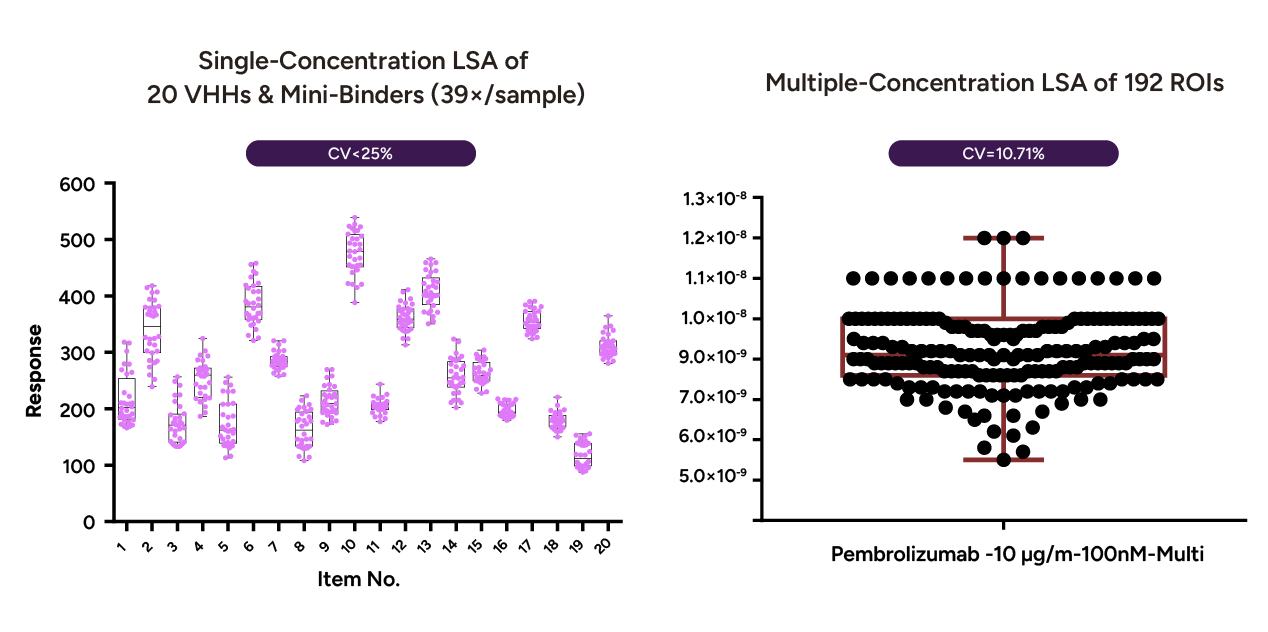
    384-well cell-free expression and Carterra LSA assays deliver reproducible results, with production variability <10% and assay response variation <25%.

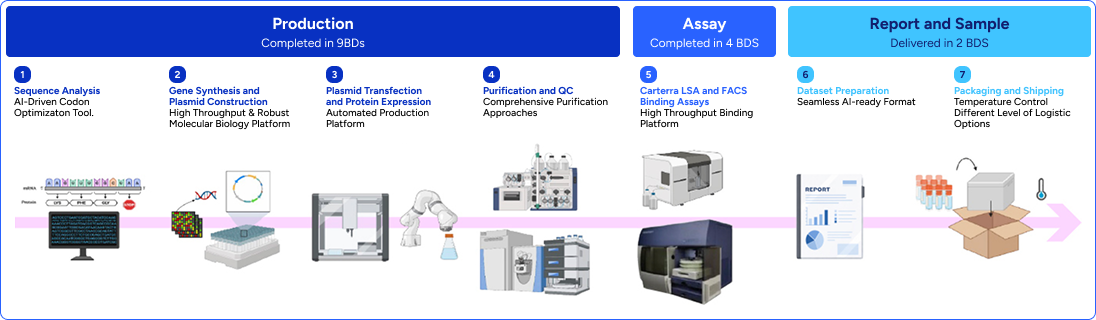
  • 500 AI-Designed IgGs Expressed & Customized Assayed in 15-Business-Day via TurboCHO HTP Platform.

    Project Background:

    • The in vivo discovery team focuses on a new pipeline for antibody discovery and screening.
    • A total of 500 human IgGs need to be expressed and validated via customized affinity binding assays (Carterra LSA) and cell-based binding assays (FACS).
    • Except for the customized datasets, an extra 100 ug of each sample must be returned.

    Results:

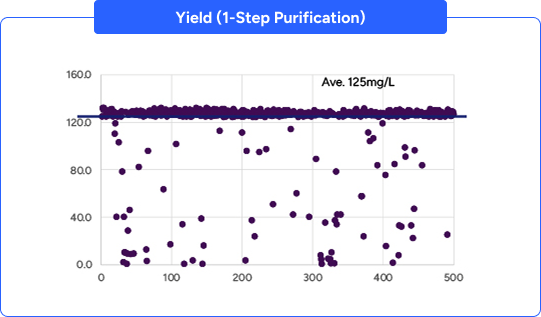
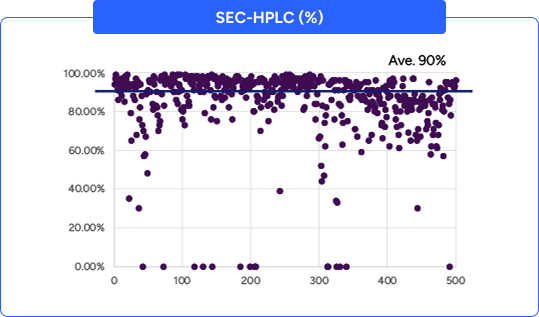
    • Average Yield: 125mg/L and SEC-HPLC Purity: 90%
    • Total timeline: 15BDs including 3 key customized steps (assay protocol + AI-ready report + sample delivery)
    • Rapid customization of AI drug discovery process to achieve fast 15 BD delivery timeline
  • Cell-Free Expression Bundled with Affinity Ranking and Characterization Delivered in 14 Days

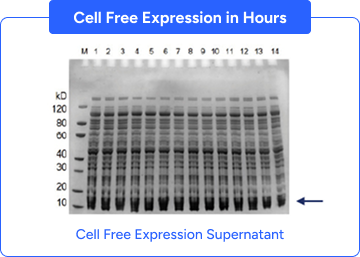
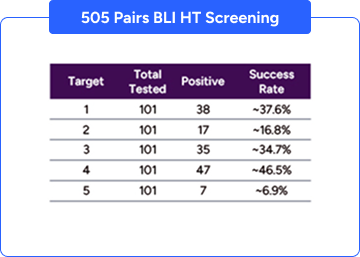
    A set of 500 AI-derived variants across five targets was evaluated using an integrated sequence-to-data workflow for rapid hit discovery. Variants were generated and expressed using a proprietary cell-free system, enabling protein production within hours, and directly advanced into high-throughput BLI screening. Initial binders were identified across all targets within 4 days, with hit rates ranging from ~6.9% to ~46.5%.

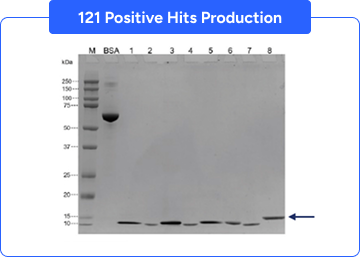
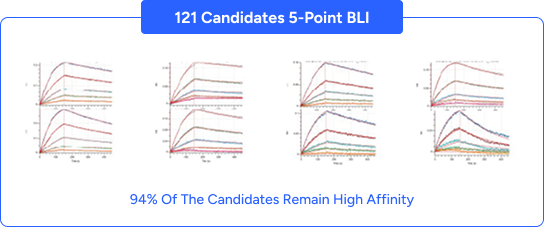
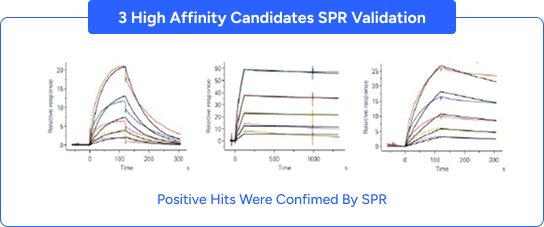
    Selected hits were scaled up, purified, characterized by 5-point BLI, and the top candidates were subsequently subjected to SPR kinetic analysis. Expression performance remained strong throughout, with average yields of 1.64 mg/mL, maximum yield of 712 μg/mL (CFPS), and >85% purity observed in 95% of variants.

    This workflow enables progression from AI-designed sequences to validated binding data in just 14 days, accelerating confident hit selection in early discovery.

    Gene Preparation & Cell-Free Expression

    HT BLI
    Screening

    Hit
    Selection

    Cell Free Expression of Hit Candidates

    5-Point
    BLI

    SPR Kinetic Validation

  • Multi‑Assay Platform Enables Reproducible, Scalable Hit Validation and Characterization

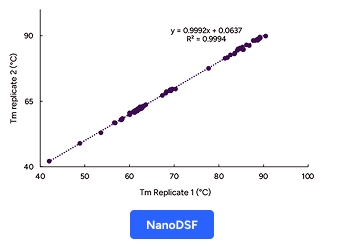
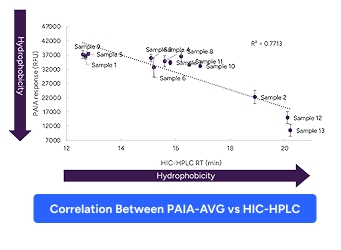
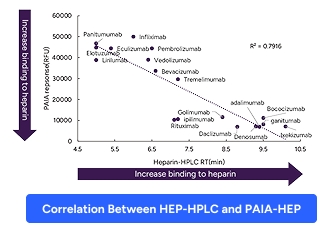
    Validation assay list and risk assessment

    The LSA platform provides both the throughput required for large-scale screening and the precision required for downstream lead characterization.

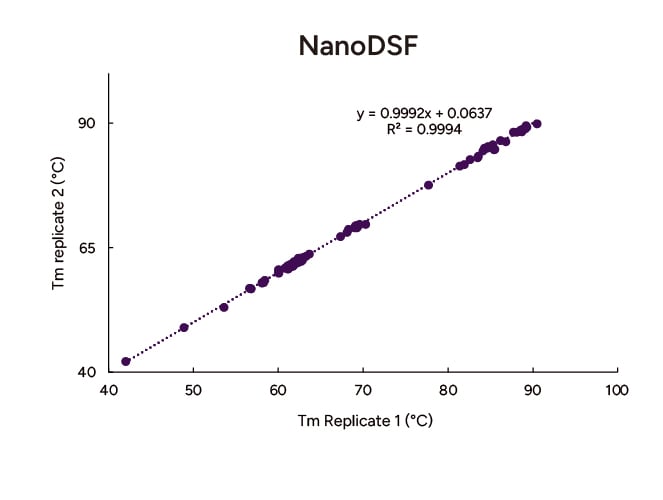
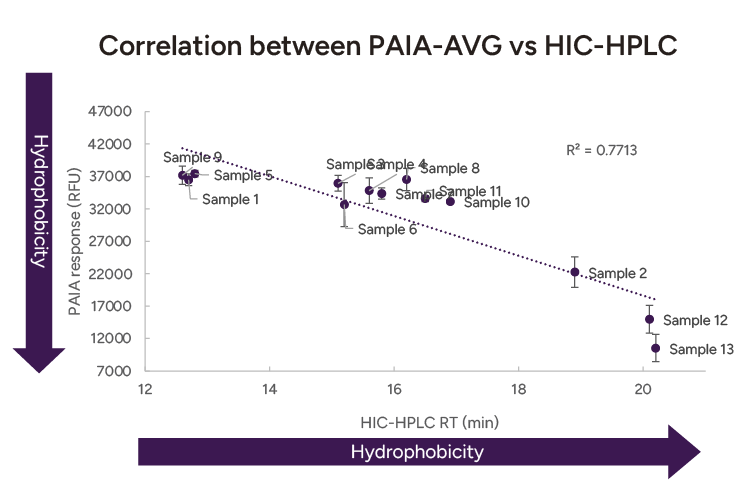
    Strong correlation and high reproducibility was observed across orthogonal analytical methods, supporting reliable developability assessment and candidate differentiation.

  • Affinity Binding Solution Comparison across SPR, BLI, and Carterra LSA

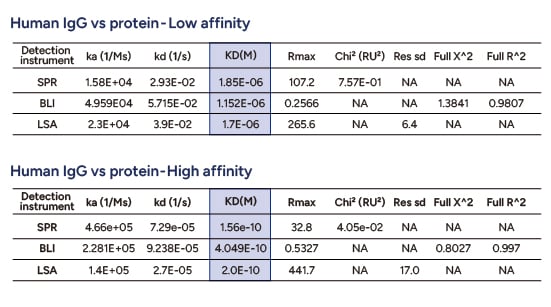
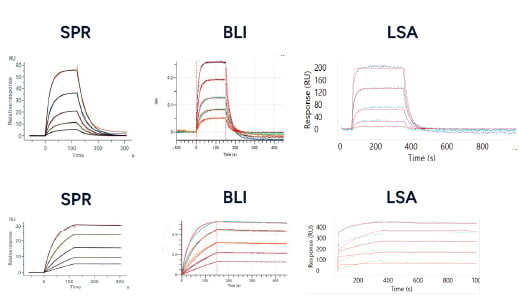
    In this study, binding affinities (KD) were measured using SPR, BLI, and LSA to assess cross-platform consistency.

    Results showed that KD values from BLI and LSA closely matched those from SPR across different affinity ranges, demonstrating strong agreement in binding measurements.

    These results validate BLI and LSA as reliable, high-throughput alternatives to SPR, enabling flexible platform selection without compromising data accuracy.

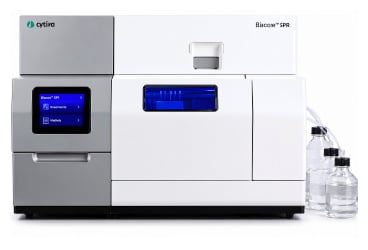
    Biacore 8K SPR

    Biacore 8K SPR

    Octet BLI

    Octet BLI

    Cartrerra LSA

    Cartrerra LSA

Ready to accelerate your next DBTL cycle?

Share your designs, targets, or questions with the AIDD Agent and turn
AI-generated sequences into decision-ready data faster.

Customer Reviews