The American Society of Gene and Cell Therapy’s (ASGCT) Annual Meeting stands as the pinnacle gathering for gene and cell therapy professionals, offering a platform to glean insights from cutting-edge research, embrace emerging technologies, and forge impactful connections within the field.

Join the GenScript team at Booth #1817 during ASGCT’s 27th annual meeting at the Baltimore Convention Center, MD. Aligned with ASGCT’s mission of advancing research, education, and communication in the realm of gene and cell therapy, our experts will be on hand to explore how our suite of services and products can bolster your research endeavors.

Presentation and Posters

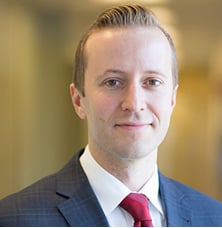
Alex Goraltchouk

Presentation

An adjustable dose gene therapy platform technology - Prometheus™

Alex Goraltchouk
Chief Operating Officer, Remedium Bio

Date/Time: May 10th, 1:30-2:00pm EST Location: Room 337-338

SEE BIO & ABSTRACT

Bio: Alex Goraltchouk is the Chief Operating Officer at Remedium Bio with broad functional responsibilities overseeing development, technical operations, manufacturing, and supply chain for viral and non-viral vector gene therapies. Prior to Remedium, Alex held roles of increasing responsibilities with a focus on Operations and R&D at companies ranging from start-ups to Fortune 500, including Allergan, Biogen, and Regeneron. Alex holds a Bachelor's in Materials and Master's in Chemical Engineering from the University of Toronto, an MBA and Master of Science in Finance from Indiana University, and a Master of Science in Microbiology and Cell Sciences from the University of Florida. He is a Cornell certified Six-Sigma/Lean black belt, holds a MicroMasters in Supply Chain Management from MIT, and a MicroMasters in Bioinformatics from the University of Maryland Global Campus. Alex is an author of close to 200 patents, patent applications, peer-reviewed scientific publications, and abstracts with a focus on biotechnology and advanced therapeutic modalities.

Abstract: Gene therapies have revolutionized medicine by enabling durable, curative treatments for a number of genetic diseases. Unfortunately, they remain largely relegated to the treatment of rare, monogenic conditions due to their high cost, immunogenicity, and inability to adjust the dose following initial administration. Recombinant protein treatments enable dose adjustment, but require repeat, often lifelong treatment regimens, and are challenged by pharmacokinetic sawtoothing, which limits safety at the peaks and efficacy at the troughs. To overcome these challenges, Remedium developed the first adjustable-dose gene therapy system, Prometheus™ - for subcutaneous administration of adipocyte-targeted, non-integrating genetic cassettes, in a low-cost, non-antigenic manner. The system enables durable transgene expression with zero-order pharmacokinetics, remaining local to the subcutis while secreting therapeutic protein in the same locale where it would otherwise be delivered by a series or repeat injections. Using IVIS bioluminescent reporter transgene imaging, we confirmed that expression was durable over the full study duration (6 months), predictably up-titratable via redosing, and down-titratable by a number of physical (cryolipolysis) and pharmacological (iCasp9 suicide gene) techniques. We confirmed the system to be highly localized to the subcutaneous injection area (>99.6% based on assayed tissues), with predominant targeting of adipocytes and no detectable involvement of the liver, spleen, heart, or kidneys. The Prometheus™ system was used to administer GLP-1 and Exenatide (EX4) to mice with diet-induced diabetes and obesity. Prometheus™-delivered GLP-1-DNA and EX4-DNA treatments produced 20% and 14% weight loss at 4 weeks relative to vehicle control. Fasting glucose levels were reduced by 37% and 38% for GLP-1- and EX4-treated animals, relative to high-fat diet, diabetic mice. Insulin sensitivity was enhanced as evidenced by a 25% and 22% area under curve (AUC) reduction on the insulin tolerance test (ITT). Similarly, the glycemic response was improved as evidenced by 29% and 26% AUC reductions on the glucose tolerance test (GTT) for GLP-1- and EX4-treated animals, respectively. The treatments were well tolerated locally and systemically as confirmed by the absence of injection site reactions and systemic biomarkers of inflammation, liver function, and muscle injury. In summary, we report the development of the first, adjustable-dose gene therapy platform technology and its potential application for the treatment of type 2 diabetes and obesity.

Elaine Lou

Poster 1

Revolutionizing Gene and Cell Therapy: The Power of Precision Mutant Libraries

Elaine Lou,
Global Product Manager, GenScript

Session Date/Time: 5/9/2024 12:00:00 PM

Session Title:  Thursday Posters: Immune Targeting and Approaches with Genetically-Modified Cells and Cell Therapies

Presentation Room: Exhibit Hall

Final Abstract Number: 1328

SEE ABSTRACT

Abstract: Precision mutant DNA libraries have become pivotal in advancing protein engineering by streamlining the process. The conventional techniques for creating mutant libraries, reliant on degenerate oligonucleotides and error-prone PCR, often face challenges due to bias and a lack of diversity. However, the advent of next-generation, chip-based technologies has expanded the scope of these libraries, especially in gene and cell therapy research. Chip-based libraries, known for their high-throughput, precise, and accurate synthesis capabilities, significantly speed up research in the fast-paced field of gene and cell therapy. They offer a uniform distribution of amino acids, reducing bias, and the exclusion of stop codons ensures the generation of functional proteins. Moreover, their customizable nature facilitates targeted genetic investigations, thereby accelerating the creation of tailored, effective therapies.

A key application is the modification of AAV capsids to circumvent immune detection and improve targeting specific tissues, utilizing approaches such as peptide masking based on rational design and computational deep learning. An example is AAV.CPP.16, which has shown a 5-fold increase in neuron targeting and enhanced interaction with the blood-brain barrier, making it a potential tool for delivering anti-cancer drugs in glioblastoma models in mice[1]. In the realm of CAR T-cell therapy, novel CAR constructions are enhancing cell targeting and efficiency, with VHH DNA variant library screenings playing a significant role in improving affinity. The field has witnessed significant growth with several approvals of gene and cell therapies, including Spinraza, Kymriah, Yescarta, Luxturna, and Zolgensma, underscoring the industry's expansion and investment appeal. Furthermore, the integration of artificial intelligence in computational design is revolutionizing the exploration of novel genetic sequences, thereby boosting the efficacy of gene and cell therapies. An instance of this is the development of new antibody mutations with enhanced affinity and specificity, as seen in the antibody library of Emibetuzuma[2]. With approvals of groundbreaking therapies and the integration of artificial intelligence in genetic design, precision mutant libraries are not just enhancing current GCT research but are also laying the foundation for a new era of sophisticated, efficacious gene and cell-based therapies.

Elaine Lou

Poster 2

Total solution for efficient cell therapy engineering with non-viral DNA payloads

Lumeng Ye,
Director of Novel therapeutic materials, GenScript

Session Date/Time: 5/10/2024 12:00:00 PM

Session Title:  Friday Posters: Nonviral Therapeutic Gene Delivery and Synthetic/Molecular Conjugates

Presentation Room: Exhibit Hall

Final Abstract Number: 1718

SEE ABSTRACT

Abstract: With the fast progress and deeper understanding of CAR-T cell therapy, finding a better solution other than lentivirus transduction is more requested, to overcome the functional limitation on random insertion, uncontrolled copy number of CAR insertion and to overcome the capacity limitation of GMP lentivirus manufacture.

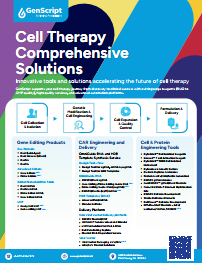
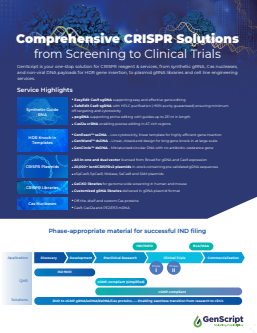
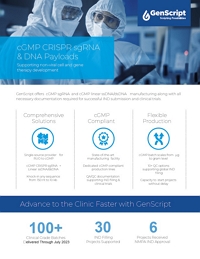
Here we report two non-viral DNA payloads, for highly efficient non-viral cell therapy engineering and manufacture. GenExactTM ssDNA, linear single-stranded DNA produced by proprietary isothermal enzymatic reaction process, with high purity and sequence integrity proved by NGS and HRMS. This high purity single-stranded format DNA payloads also proved with lower cytotoxicity than dsDNA, could facilitate high knock-in efficiency of CAR sequence at specific location when coupled with CRISPR gene editing system, as about 50% at TRAC with CTS (Cas9 Targeting Sequence) modification1, and >90% at GAPDH with SLEEK (SeLection by Essential-gene Exon Knock-in) design2. For other types of immune cells, GFP knock-in can be achieved as 50% on iPSC and 30% on NK cell as well, and the editing efficiency by HDR (homology-directed repairing) can be further increased by selected chemical compounds. With non-viral CRISPR editing and electroporation process, different kinds of immune cell therapy can be manufactured with more defined design and unified final product.

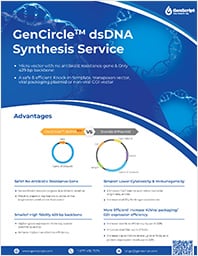
For insertion of large cargo that longer than 5kb, GenCircleTM dsDNA, circular supercoiled dsDNA with minimized backbone (430 bp), is designed for large insertion coupled with transposon system. With the reduced backbone size and immunogenicity, GenCircle can be used for the delivery of large cargo without trigger severe cytotoxicity, and can achieve around 60% insertion rate on T cell by dual vector process. This protocol paves the way for non-viral CAR-T manufacture with multiple CAR design and precise modulation with logic control design.

1) Shy B.R., Vykunta V.S., Ha A., Talbot A., et al., High-yield genome engineering in primary cells using a hybrid ssDNA repair template and small-molecule cocktails. (2023) Nat Biotechnol., 41(4):521-531. doi: 10.1038/s41587-022-01418-8.

2) Allen A.G., Khan S.Q., Margulies C.M., Viswanathan R., A highly efficient transgene knock-in technology in clinically relevant cell types. (2023) Nat Biotechnol., doi: 10.1038/s41587-023-01779-8.

PhD-Level Support at Our Booth

Multiple professional scientists from GenScript will be at the booth to provide the chance for in-person communication.
We are looking forward to seeing you there!

Raymond Miller

Raymond Miller

Head of GPM, Nucleic Acid and peptide

Jing Min

Jing Min

Associate Vice President of Gene Dept

Daksha Patel

Daksha Patel

Sr. Segment Marketing Manager

Zilong Li

Zilong Li

Director of Gene Department

Claire Zhou

Claire Zhou

Lead of Nucleic Acid and Peptide, GMD

Scott Pritchett

Scott Pritchett

Sr. Global Market Development Manager

Christopher Geissler

Christopher Geissler

GMP Sales Account Manager

Vivien Yu

Vivien Yu

Sales Account Manager, Catalog Products

Lumeng Ye

Lumeng Ye

Director of Novel Therapeutic Materials

>Arielle Karp

Arielle Karp

Regional Sales Account Manager

Bharat Behl

Bharat Behl

District Sales Lead

Monica Sun

Monica Sun

Product Manager, Catalog Products

Elaine Lou

Elaine Lou

Global Product Manager

Grand Prizes

Join us at booth #3920 to enter the raffle for a grand prize!

AirPods 3rd Generation

AirPods 3rd Generation

iPad 10th Generation

iPad 10th Generation

DJI-Mini 2 SE Drone

DJI-Mini 2 SE Drone

scientist image

Swags

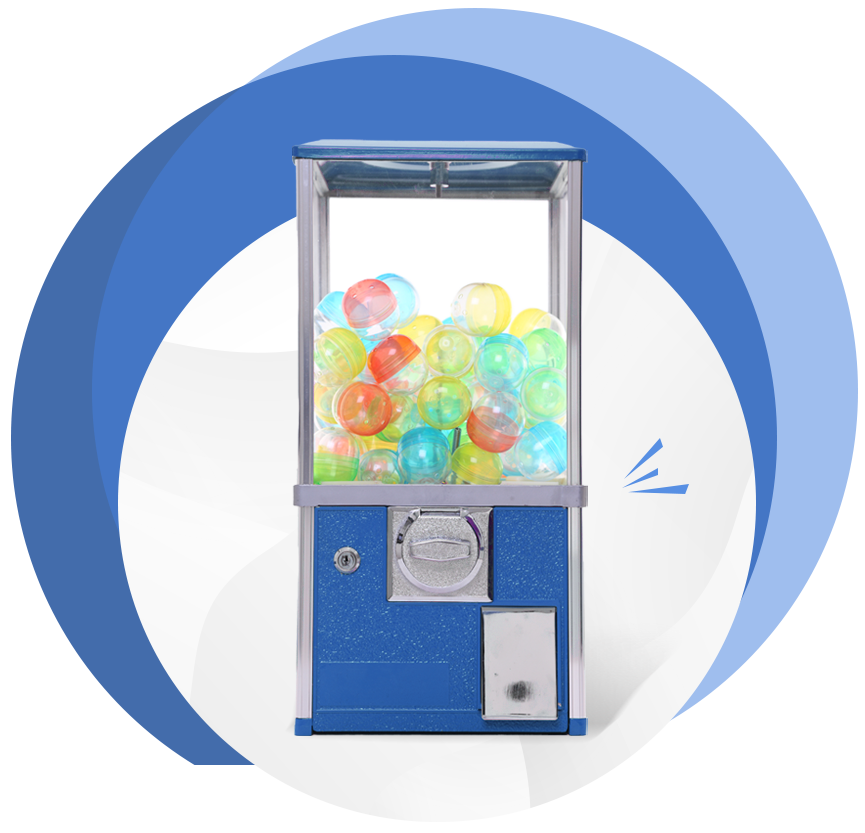
Visit our Booth #1817 for a chance to play the egg machine!

Power Bank

Speaker

Stuffed Animals

* For those who can not attend this conference, we will provide to the opportunity to receive swags by mail. For the first 20 GenScript new registrants, we will send out one of the items above: Power Bank, Speaker, Travel Fanny Pack. Other registrants will receive stuffed animals. Click the button to create account and get a swag now.

* Swag shipment is only limited to North America registrants.

Resources

GenScript partners with scientists globally through its services and products to advance cancer research. Learn how our services have the power to advance your applications through our Resources, available at Booth #1817.