


























Catalog Products » AmMag™ SA Plus System
Manual
COAs

AmMag™ SA Plus System

*This product has been discontinued!*
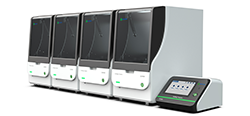
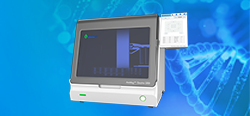
AmMag™ SA Plus system is designed to automate protein or antibody purification using magnetic beads. The instrument is capable of using 50 mL tubes and can purify up to 12 samples simultaneously within one hour. Compared with the traditional resin-based purification systems, it eliminates the need for centrifugation and filtration when treating samples, and results in hours of pre-processing time saved. In combination with GenScript’s antibody or recombinant protein binding magnetic beads, the system offers high throughput protein and antibody purification.
L01013
Ask us a question
Description

AmMag™ SA Plus system is designed to automate protein or antibody purification using magnetic beads. The instrument is capable of using 50 mL tubes and can purify up to 12 samples simultaneously within one hour. Compared with the traditional resin-based purification systems, it eliminates the need for centrifugation and filtration when treating samples, and results in hours of pre-processing time saved. In combination with GenScript’s antibody or recombinant protein binding magnetic beads, the system offers high throughput protein and antibody purification.

Key Features

Features and benefits

  • High throughput: 12 channels, each handles up to 50 ml of sample volume
  • High efficiency: Purification of 12 samples within 48 min
  • Automation: Automated washing and elution steps
  • Endotoxin control: Sterilizable environment minimizing the risk of endotoxin contamination
  • Compatibility: Compatible with standard 50mL conical centrifuge tubes

Specifications

Throughput
Up to 12 Samples / run
Beads Volume / Sample
0.1 - 2.0 mL settled beads
Sample Volume
1 - 50 mL
Compatibility
50 mL conical centrifuge tubes
Min Elution Volume
0.4 mL
Dimension (LxWxH)
545 x 515 x 545 mm / 21.5 x 20.3 x 21.5 in
Weight
65 Kg / 117 lb
Power
110 ~ 240 VAC, 50/60 Hz
Back

Lauren Gebhardt, et al. A Robust, High-Titer, Semi-Automated, and In-Culture Antibody-Capturing Transient CHO Platform Technology. Antibodies. (2025-10)
Jeremy Shek; Chen Sun; Elise M. Wilson; Fatemeh Moadab; Kathryn M. Hastie; Roshan R. Rajamanickam; Patrick J. Penalosa; Stephanie S. Harkins; Diptiben Parekh; Chitra Hariharan; Dawid S. Zyla; Cassandra Yu; Kelly C. L. Shaffer; Victoria I. Lewis; Ruben Diaz Avalos; Tomas Mustelin; Erica Ollmann Saphire, et al. Human endogenous retrovirus K (HERV-K) envelope structures in pre- and postfusion by cryo-EM. SCIENCE ADVANCES. (2025-08)
Aishwarya Venkatramani, et al. Modifying recombinant purple acid phosphatase using computational design. European Biophysics Journal. (2025-07)
Emre Fertan; Jeff Y. L. Lam; Giulia Albertini; Maarten Dewilde; Yunzhao Wu; Oluwatomi E. S. Akingbade; Dorothea B ken; Elizabeth A. English; Bart De Strooper; David Klenerman, et al. Lecanemab preferentially binds to smaller aggregates present at early Alzheimer's disease. Alzheimer's & Dementia. (2025-04)
Fernanda Ana-Sosa-Batiz; Shailendra Kumar Verma; Norazizah Shafee; Robyn Miller; Chris Conner; Kathryn M. Hastie; Julia Timis; Erin Maule; Michael N. Nguyen; Linda Tran; Krithik Varghese; Henry Madany; Audrey Elizabeth Street; Michelle Zandonatti; Meng Ling Moi; Kurt Jarnagin; David R. Webb; Erica Ollmann Saphire; Kenneth Kim; Sujan Shresta, et al. A humanised ACE2, TMPRSS2, and FCGRT mouse model reveals the protective efficacy of anti-receptor binding domain antibodies elicited by SARS-CoV-2 hybrid immunity. EBioMedicine. (2025-03)
Marie-Lynn Cuypers; Tom Jaspers; Jarne Clerckx; Simon Leekens; Christopher Cawthorne; Guy Bormans; Frederik Cleeren; Nick Geukens; Bart De Strooper; Maarten Dewilde, et al. Increasing brain half-life of antibodies by additional binding to myelin oligodendrocyte glycoprotein, a CNS specific protein. Fluids and barriers of the CNS. (2025-01)
Montader Ali, et al. Automated optimization of the solubility of a hyper-stable α-amylase. Open Biol. (2024-05)
Karina L. Bursch; Christopher J. Goetz; Guanming Jiao; Raymundo Nu ez; Michael D. Olp; Alisha Dhiman; Mallika Khurana; Michael T. Zimmermann; Raul A. Urrutia; Emily C. Dykhuizen; Brian C. Smith, et al. Cancer-associated polybromo-1 bromodomain 4 missense variants variably impact bromodomain ligand binding and cell growth suppression. The Journal of Biological Chemistry. (2024-04)
Rajeshwer S Sankhala , et al. Diverse array of neutralizing antibodies elicited upon Spike Ferritin Nanoparticle vaccination in rhesus macaques. Nat Commun. (2024-01)
Kathryn M Hastie, et al. Potent Omicron-neutralizing antibodies isolated from a patient vaccinated 6 months before Omicron emergence. Cell Rep. (2023-04)
I-Ting Teng, et al. Molecular probes of spike ectodomain and its subdomains for SARS-CoV-2 variants, Alpha through Omicron. PLoS ONE. (2021-12)
Vincent Dussupt, et al. Low-dose in vivo protection and neutralization across SARS-CoV-2 variants by monoclonal antibody combinations. Nat Immunol. (2021-10)
Learn More
Back