


































CNTF, Rat
| $74.00 | |
| Z03313-10 | |
|
|
|
|
|
|
|
|
|
| Ask us a question | |
IVD Raw Materials
| $74.00 | |
| Z03313-10 | |
|
|
|
|
|
|
|
|
|
| Ask us a question | |
| Species | Rat | |
| Protein Construction |
|
|
| Purity | > 95% as analyzed by SDS-PAGE | |
| Endotoxin Level | < 0.2 EU/μg of protein by gel clotting method | |
| Biological Activity | ED50 < 30.0 ng/ml, measured by its ability to induce alkaline phosphatase production by TF-1 Cells. | |
| Expression System | E. coli | |
| Apparent Molecular Weight | ~22.9 kDa, on SDS-PAGE under reducing conditions. | |
| Formulation | Lyophilized after extensive dialysis against 50 mM Tris, pH 8.0. | |
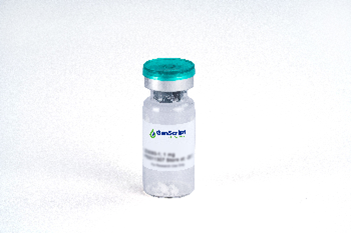
| Reconstitution | It is recommended that this vial be briefly centrifuged prior to opening to bring the contents to the bottom. Reconstitute the lyophilized powder in ddH₂O or PBS up to 100 μg/ml. | |
| Storage & Stability | Upon receiving, this product remains stable for 6 months at lower than -70°C. Upon reconstitution, the product should be stable for 1 week at 4°C or for 3 months at -20°C. For long term storage it is recommended that a carrier protein (example 0.1% BSA) be added. Avoid repeated freeze-thaw cycles. |
| Target Background | Ciliary Neurotrophic Factor (CNTF) is a polypeptide hormone which acts within the nervous system where it promotes neurotransmitter synthesis and neurite outgrowth in certain neuronal populations. CNTF is a potent survival factor for neurons and oligodendrocytes and may play a role in reducing tissue damage during increased inflammation. A mutation in this gene, which results in aberrant splicing, leads to ciliary neurotrophic factor deficiency, however this phenotype is not causally related to neurologic disease. |
| Synonyms | Ciliary Neurotrophic Factor |
For laboratory research use only. Direct human use, including taking orally and injection and clinical use are forbidden.