




































DDR1, His, Human
| $340.00 | |
| Z05211-100 | |
|
|
|
|
|
|
|
|
|
| Ask us a question | |
IVD Raw Materials
| $340.00 | |
| Z05211-100 | |
|
|
|
|
|
|
|
|
|
| Ask us a question | |
| Species | Human | ||||
| Protein Construction |
|
||||
| Purity | > 95% as determined by BisTris PAGE | ||||
| Endotoxin Level | Less than 1EU per μg by the LAL method. | ||||
| Biological Activity | Measured by its binding ability in a functional ELISA. Test result was comparable to standard batch. | ||||
| Expression System | HEK293 | ||||
| Theoretical Molecular Weight | 45.1 kDa | ||||
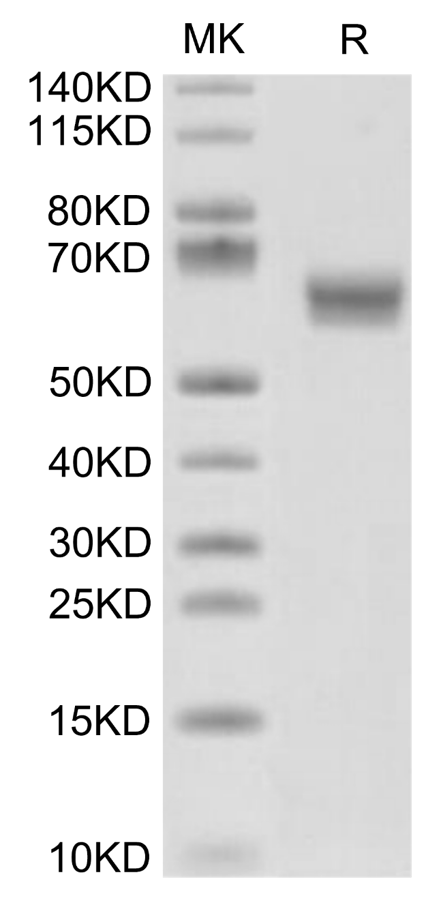
| Apparent Molecular Weight | Due to glycosylation, the protein migrates to 63-67 kDa based on Bis-Tris PAGE result. | ||||
| Formulation | Lyophilized from 0.22μm filtered solution in PBS (pH 7.4). | ||||
| Reconstitution | Centrifuge the tube before opening. Reconstituting to a concentration more than 100 μg/ml is recommended. Dissolve the lyophilized protein in distilled water. | ||||
| Storage & Stability | Upon receiving, the product remains stable for 6 months at -20℃ or below. Upon reconstitution, the product should be stable for 3 months at -80℃. Avoid repeated freeze-thaw cycles. |
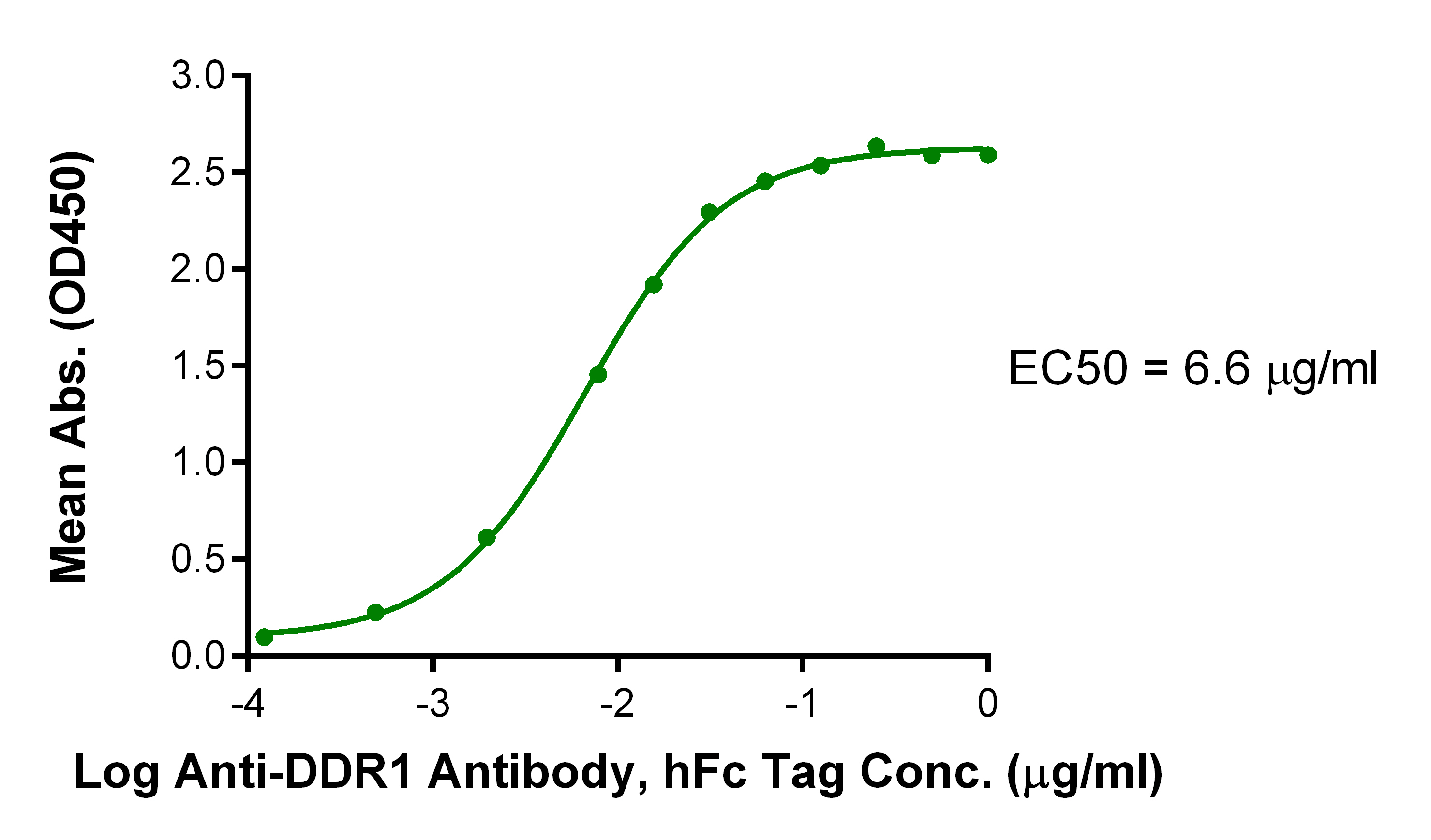
Immobilized DDR1, His, Human, His Tag at 1 μg /ml (100 μl/well) on the plate. Dose response curve for Anti-DDR1 Antibody, hFc Tag with the EC50 of 6.6ng/ml determined by ELISA. »
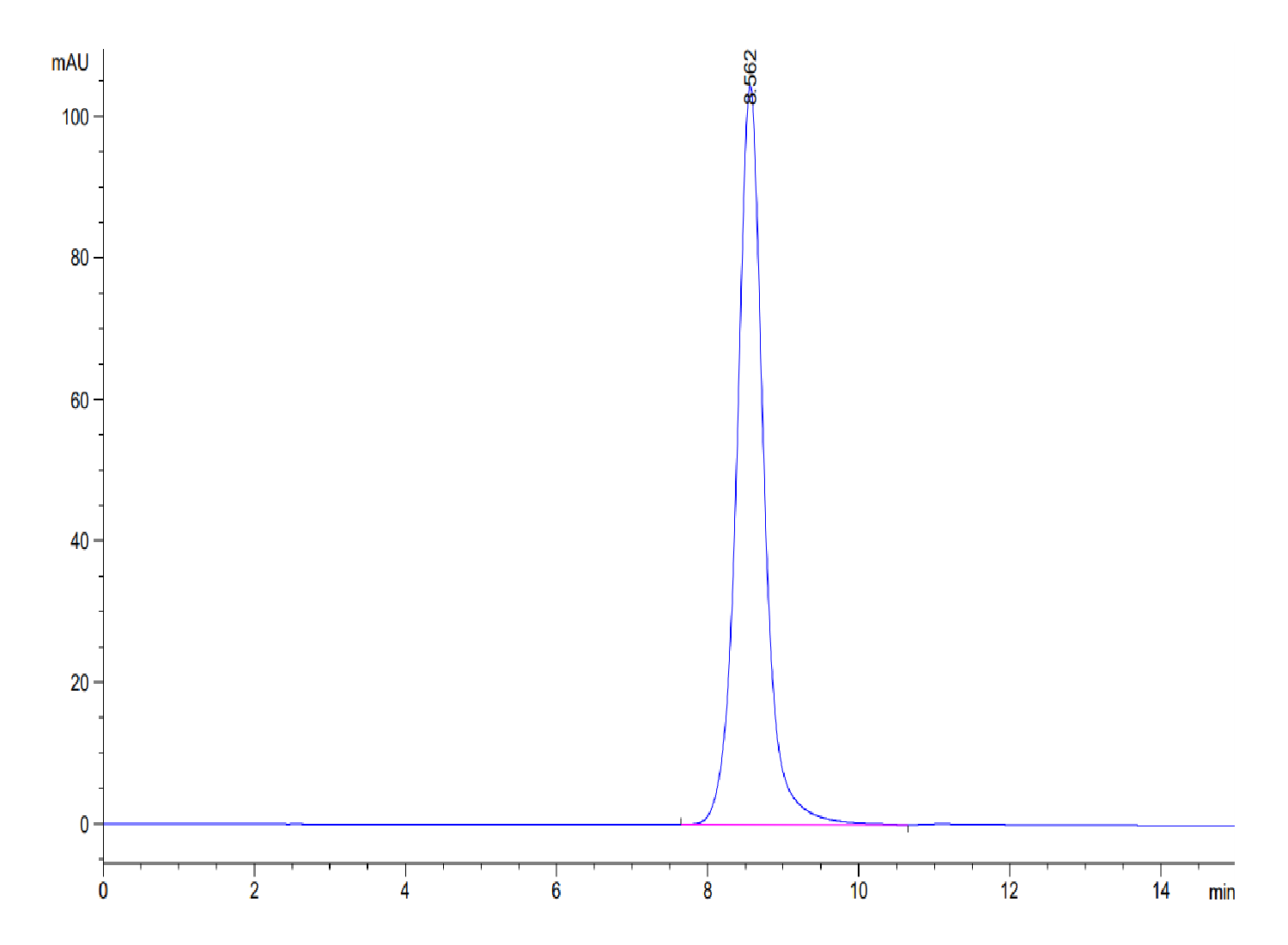
The purity of DDR1, His, Human is greater than 95% as determined by SEC-HPLC. »
DDR1, His, Human on Bis-Tris PAGE under reduced condition. The purity is greater than 95%. »
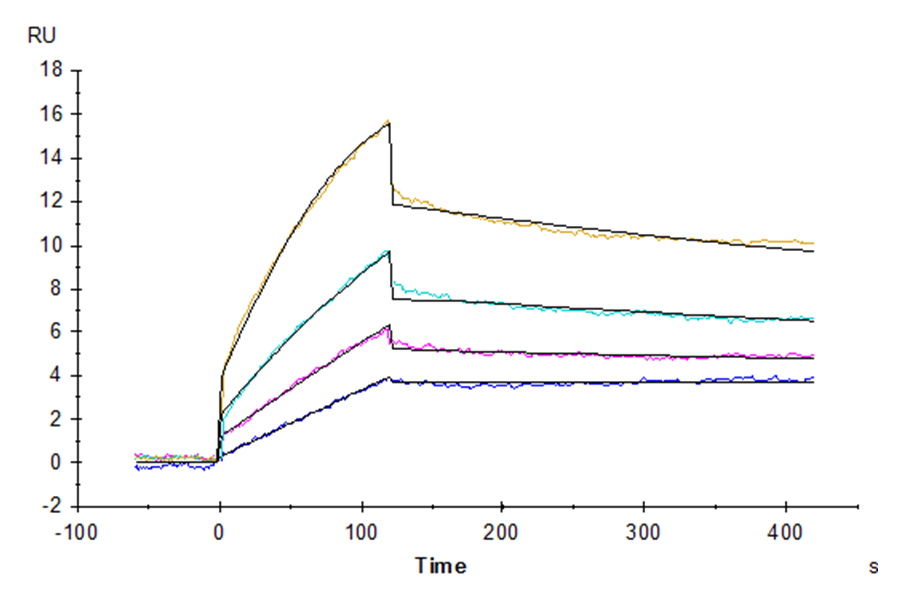
DDR1, His, Human, His Tag captured on CM5 Chip via Anti-His Antibody can bind Native Human Collagen I protein with an affinity constant of 0.806 nM as determined in SPR assay (Biacore T200). »
| Target Background | Discoidin domain receptor1 (DDR1) is a collagen activated receptor tyrosine kinase and an attractive anti-fibrotic target. Its expression is mainly limited to epithelial cells located in several organs including skin, kidney, liver and lung. DDR1's biology is elusive, with unknown downstream activation pathways; however, it may act as a mediator of the stromal-epithelial interaction, potentially controlling the activation state of the resident quiescent fibroblasts. |
| Synonyms | HGK2; MCK-10; CAK; EDDR1; NEP; NTRK4; PTK3A; RTK6; TRKE; CD167a; EC 2.7.10.1 |
For research use only. Not intended for human or animal clinical trials, therapeutic or diagnostic use.