



































VLDLR, His, Mouse
| $240.00 | |
| Z06401-100 | |
|
|
|
|
|
|
|
|
|
| Ask us a question | |
IVD Raw Materials
| $240.00 | |
| Z06401-100 | |
|
|
|
|
|
|
|
|
|
| Ask us a question | |
| Species | Mouse | ||||
| Protein Construction |
|
||||
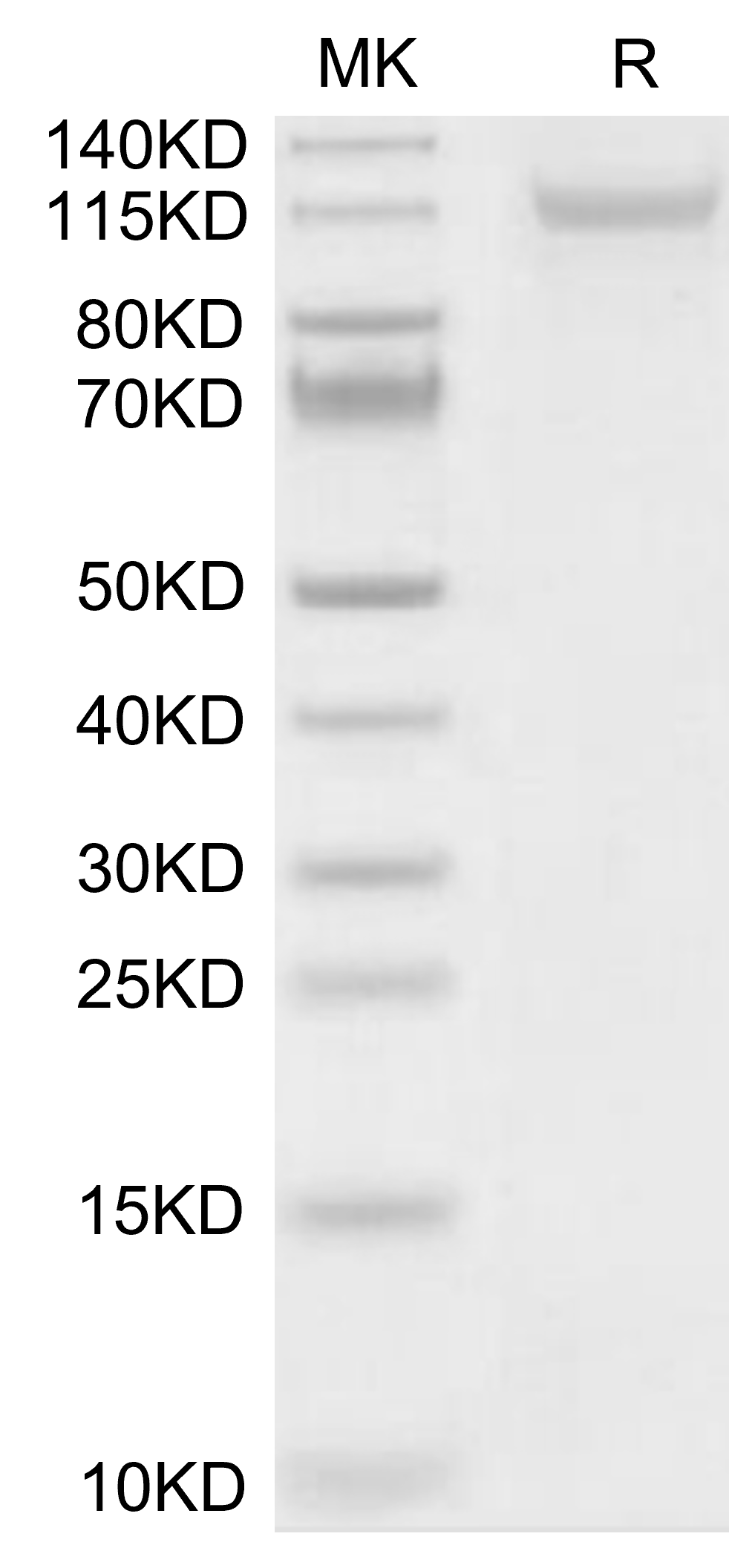
| Purity | > 95% as determined by BisTris PAGE | ||||
| Endotoxin Level | Less than 1EU per μg by the LAL method. | ||||
| Expression System | HEK293 | ||||
| Theoretical Molecular Weight | 86.1 kDa | ||||
| Apparent Molecular Weight | Due to glycosylation, the protein migrates to 110-130 kDa based on Bis-Tris PAGE result. | ||||
| Formulation | Lyophilized from 0.22μm filtered solution in PBS (pH 7.4). | ||||
| Reconstitution | Centrifuge the tube before opening. Reconstituting to a concentration more than 100 μg/ml is recommended. Dissolve the lyophilized protein in distilled water. | ||||
| Storage & Stability | Upon receiving, the product remains stable for 6 months at -20℃ or below. Upon reconstitution, the product should be stable for 3 months at -80℃. Avoid repeated freeze-thaw cycles. |
VLDLR, His, Mouse on Bis-Tris PAGE under reduced condition. The purity is greater than 95% »
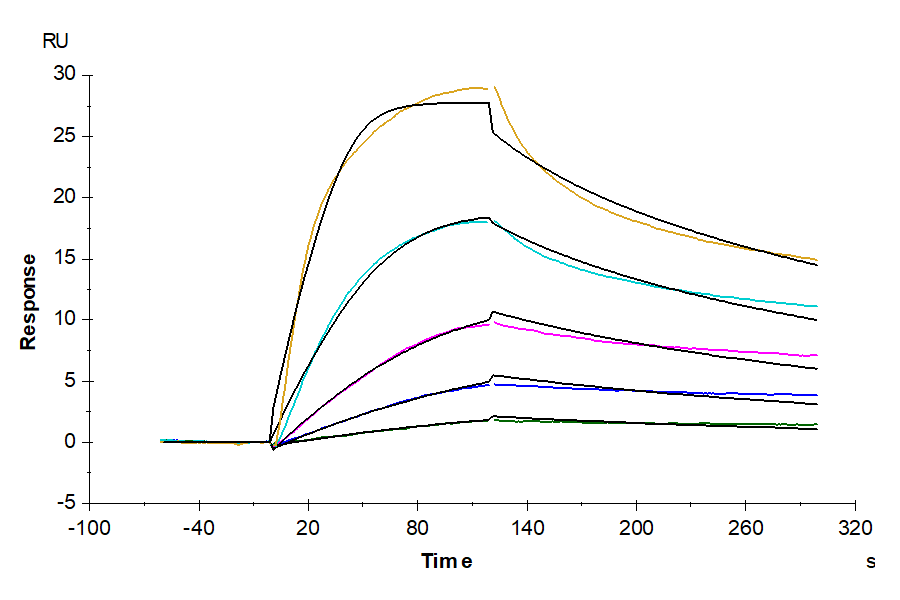
VLDLR, His, Mouse on CM5 Chip can bind Mouse PCSK9, His Tag with an affinity constant of 0.28 nM as determined in SPR assay (Biacore T200). »
| Target Background | VLDLR cerebellar hypoplasia (VLDLR-CH) is characterized by non-progressive congenital ataxia that is predominantly truncal and results in delayed ambulation, moderate-to-profound intellectual disability, dysarthria, strabismus, and seizures.VLDLR-CH is inherited in an autosomal recessive manner. Carrier testing for at-risk relatives, prenatal testing for a pregnancy at increased risk and preimplantation genetic testing are possible when the pathogenic variants in a family are known. |
| Synonyms | VLDL-R; VLDLR; RP11-320E16.1; CHRMQ1; FLJ35024; VLDLRCH |
For research use only. Not intended for human or animal clinical trials, therapeutic or diagnostic use.