


































VNN1, His, Mouse
| $340.00 | |
| Z06402-100 | |
|
|
|
|
|
|
|
|
|
| Ask us a question | |
IVD Raw Materials
| $340.00 | |
| Z06402-100 | |
|
|
|
|
|
|
|
|
|
| Ask us a question | |
| Species | Mouse | ||||
| Protein Construction |
|
||||
| Purity | > 95% as determined by BisTris PAGE | ||||
| Endotoxin Level | Less than 1EU per μg by the LAL method. | ||||
| Expression System | HEK293 | ||||
| Theoretical Molecular Weight | 53.14 kDa | ||||
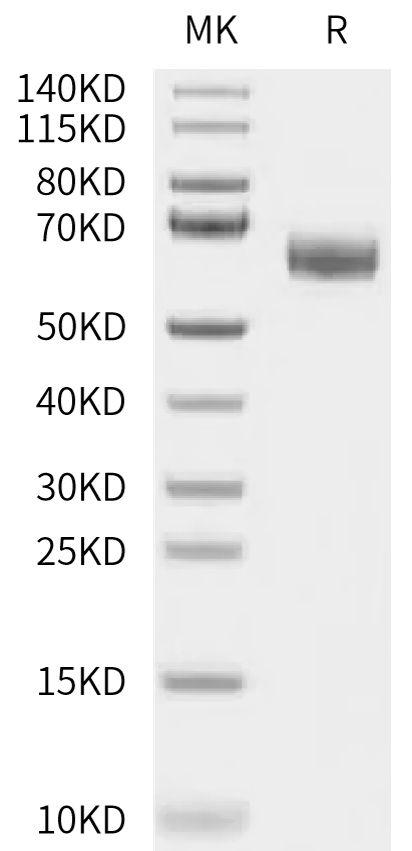
| Apparent Molecular Weight | Due to glycosylation, the protein migrates to 55-70 kDa based on Bis-Tris PAGE result. | ||||
| Formulation | Lyophilized from 0.22μm filtered solution in PBS (pH 7.4). | ||||
| Reconstitution | Centrifuge the tube before opening. Reconstituting to a concentration more than 100 μg/ml is recommended. Dissolve the lyophilized protein in distilled water. | ||||
| Storage & Stability | Upon receiving, the product remains stable for 6 months at -20℃ or below. Upon reconstitution, the product should be stable for 3 months at -80℃. Avoid repeated freeze-thaw cycles. |
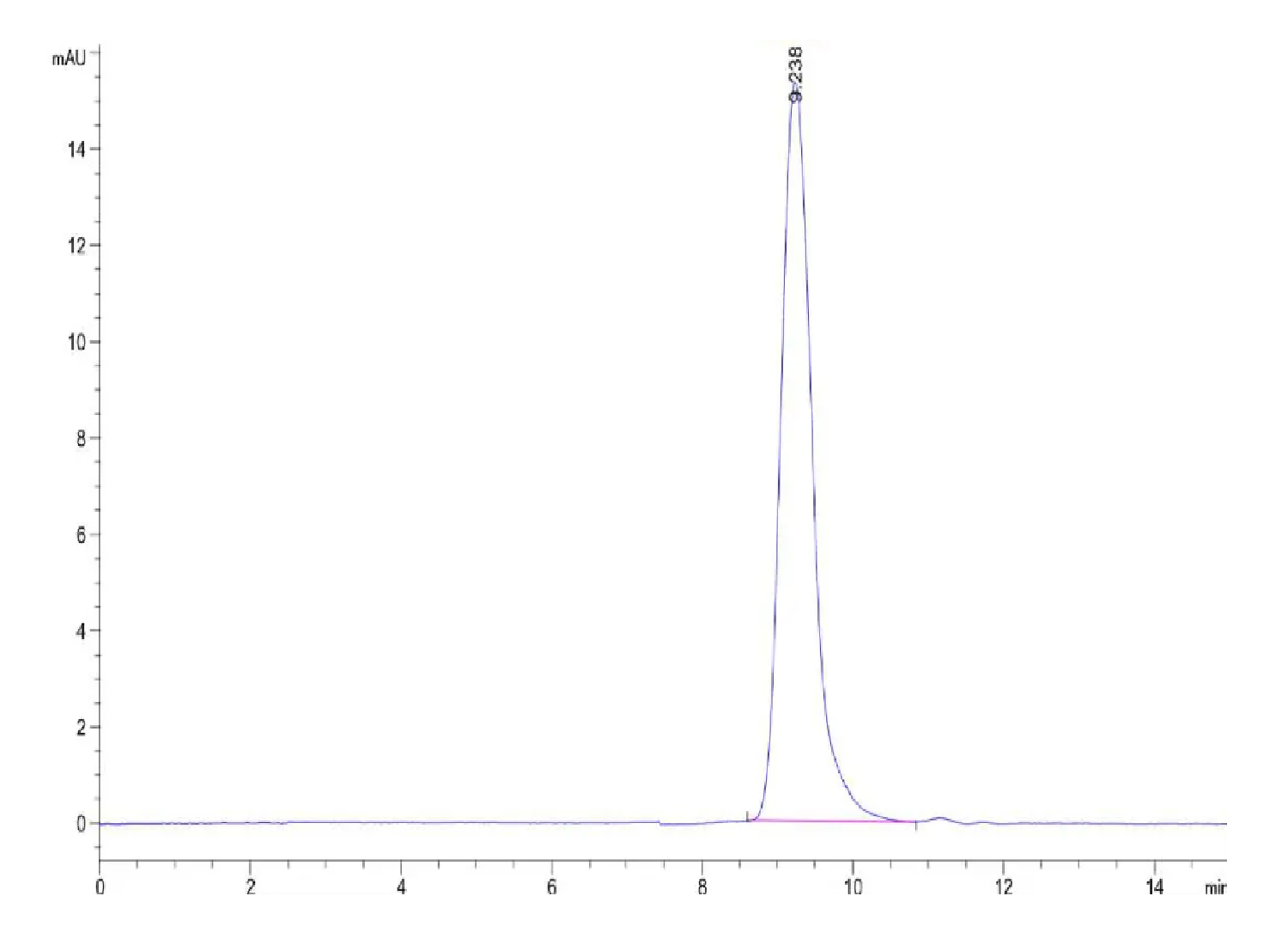
The purity of VNN1, His, Mouse is greater than 95% as determined by SEC-HPLC. »
VNN1, His, Mouse on Bis-Tris PAGE under reduced condition. The purity is greater than 95%. »
| Target Background | Vanin-1 (VNN1) is anchored to the cellular membrane with pantetheinase activity, which hydrolyzes pantetheine to produce cysteamine. VNN1 can promote oxidative stress and the inflammatory response. Additionally, VNN1 has been confirmed to be overexpressed in cancer tissues of patients with PCAD and can be used as a blood biomarker for the discrimination of PCAD from type 2 diabetes. |
| Synonyms | Vanin-1; Vanin 1; V-1 |
For research use only. Not intended for human or animal clinical trials, therapeutic or diagnostic use.