Duration: 5 min

Yongheng Huang, Ph.D.
Senior Scientist
Dr. Yongheng Huang earned his doctoral degree in biochemistry from Freie
Universität Berlin. He has been a Senior Protein Scientist at GenScript for 3 years. His
research interests focus on protein structure and function, enzymology, and protein
engineering. Dr. Huang has published his work in prestigious journals, including Molecular
Cell, Nucleic Acids Research, and Nature Communications, among others.
Ubiquitin-proteasome based Targeted Protein Degraders (TPDs)
Small molecule drugs remain essential for treating diseases today. Traditional drug discovery
typically focuses on inhibiting the biological functions of target proteins by blocking their catalytic or
functional pockets. However, only approximately 20% of cellular proteins are predicted to be potentially
targetable. Additionally, challenges such as side effects and rapid resistance development need to be
addressed.
To address these limitations, Targeted Protein Degraders (TPDs), a novel therapeutic strategy that leverages
endogenous protein degradation processes has emerged. And one of the most promising pathways is
Ubiquitin-Proteasome System (UPS) based TPDs, in which the protein substrates are recruited by the E3
ubiquitin ligases (E3 ligase), ubiquitylated, and subsequently digested by the proteasome (Fig. 1a). At
present, three sub-classes of molecules are based on the UPS pathway, molecular glues (MGs), proteolysis
targeting chimeras (PROTACs) and AbTACs. MGs and PROTACs are bifunctional and heterobifunctional molecules
respectively, which bind to both E3 ligase and protein of interest (POI), bridging them together; and the
most emerging AbTACs, utilize bispecific
antibodies instead of small molecules to trigger degradation of
extracellular and membrane proteins (Fig. 1b).
TPDs offer significant advantages, 1) They overcome the limitations of specific targeting
sites, making previously ‘un-druggable’ protein candidates ‘druggable’. 2) Each TPD molecule can participate
in multiple rounds of degradation cycles, allowing for lower functional doses. 3)TPDs selectively remove the
associated functions of target proteins. 4) By leveraging the endogenous cellular machinery, TPDs may cause
fewer side effects.
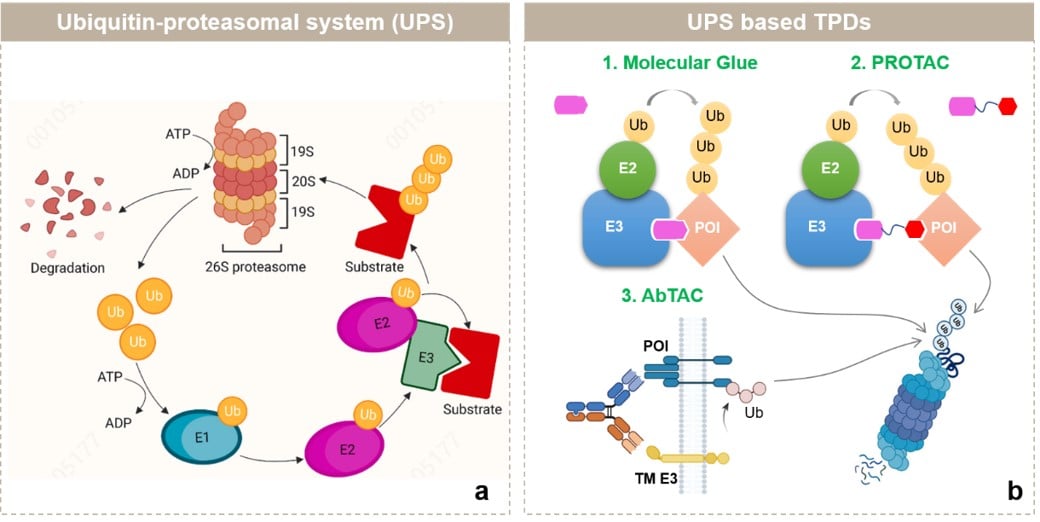
Figure 1 Ubiquitin-proteasomal protein degradation and the UPS based TPDs
Pipelines of ubiquitin-proteasome based TPDs
Since its conceptualization in 1999, Targeted Protein Degrader (TPD) drugs have achieved
significant milestones. In 2015, the first VHL- and CRBN-based PROTACs were reported, and by 2019, the first
two PROTAC drugs received clinical approval. Currently, TPD drug discovery is rapidly advancing, with
several PROTACs and molecular glues (MGs) entering clinical trials [1] (as shown in Table 1 and Table 2).
Table 1 Pipelines of PROTACs
| Company |
Indications |
E3 ligase |
Target |
Phase |
| Arivans
|
Prostate cancer
|
CRBN |
AR |
Phase II |
| Arivans / Pfizaer |
Breast cancer |
CRBN |
ER |
Phase II |
| Accutar Biotech |
Breast cancer |
CRBN |
ER |
Phase I
|
| Arivans |
Prostate cancer |
Undisclosed |
AR |
Phase I
|
| Celgene |
Prostate cancer |
CRBN |
AR |
Phase I
|
| Dialectic Therapeutics |
Liquid and solid tumors |
VHL |
BCL-xL
|
Phase I
|
| Foghom Therapeutics |
Synovial sarcoma |
Undisclosed |
BRD9 |
Phase I
|
| Kymera / Sanofi
|
Autoimmune diseases |
Undisclosed |
IRAK4 |
Phase I
|
| Kymera
|
Diffuse large B cell lymphoma
|
CRBN |
IRAK4 |
Phase I
|
| Kymera |
Liquid and solid tumours |
Undisclosed |
STAT3 |
Phase I
|
| Nurix Therapeutics |
B cell malignancies |
CRBN |
BTK |
Phase I
|
| Nurix Therapeutics |
B cell malignancies and autoimmune diseases
|
CRBN |
BTK |
Phase I
|
| C4 Therapeutics
|
Synovial sarcoma |
CRBN |
BRD9 |
IND-e |
| C4 Therapeutics
|
Non-small cell lung cancer |
CRBN |
ECFRL858R
|
IND-e |
| C4 Therapeutics
|
Solid cancer |
CRBN |
TRK |
IND-e |
Table 2 Pipelines of MGs
| Company |
Indications |
E3 ligase |
Target |
Phase |
| Celgene |
Multiple Myeloma |
CRBN |
IKZF1/3 |
Phase II |
| Celgene |
ABL |
CRBN |
IKZF1/3 |
Phase II
|
| Celgene |
Acute myeloid leukaemia |
CRBN |
GSPT1 |
Phase II
|
| Celgene |
Chronic myeloid leukaemia |
CRBN |
IKZF1/3 |
Phase I |
| C4 Therapeutics |
Multiple Myeloma |
CRBN |
IKZF1/3 |
Phase I |
| Novartis |
Solid tumors |
CRBN |
Helios |
Phase I |
Arvinas stands out as a key player in PROTAC development. It has successfully advanced the
first two PROTAC molecules through clinical trials and maintains multiple PROTAC pipelines, with over three
candidates currently in clinical trial stages. Other prominent players, including Celgene, Kymera, Nurix,
and C4 Therapeutics, also have several TPD candidates in clinical trials. These TPDs target various drug
target proteins associated with cancers, tumors, and immune diseases. Among the promising E3 ubiquitin
ligases, VHL and CRBN are particularly notable.
Outlooks of ubiquitin-proteasome based TPDs developments
Molecular degraders offer a significant opportunity to expand the druggable proteome and
modulate targets that were previously considered undruggable. Over the years, TPDs have undergone
substantial development, and currently, certain aspects are being considered:
1. Expanding the E3 Ligase Repertoire: While the pool of protein substrates has expanded
considerably, the number of E3 ubiquitin ligases utilized for targeted protein degradation remains limited.
Out of the more than 600 predicted E3 ligases in the human genome, only approximately 20% have been
exploited for targeted protein degradation, among which most efforts have focused just on CRBN and VHL. To
invigorate TPDs discovery and achieve greater success, it is essential to broaden the spectrum of tractable
E3 ubiquitin ligases. Subfamilies of E3 ubiquitin ligases, such as DCAFs, FBXs, RNFs, and TRIMs, are
currently under investigation in various discovery pipelines.
2. Diversity of E3 Ubiquitin Ligase Specificities: The specificity of E3 ubiquitin ligases is
crucial, especially for special cases. Some E3 ligases exhibit highly selective tissue expression.
Leveraging cell- or tissue-specific expression of E3 ligases can direct and limit induced protein
degradation to specific cells or tissues of interest. Additionally, targeting E3 ligases that are expressed
at specific time points or upregulated in disease conditions allows for time- or disease-specific control of
induced protein degradation. By utilizing cell- or tissue-specific E3 ligases, we can further enhance
selectivity for protein substrates and isoforms.
3. The utilization of TPDs in the fields other than drug discovery is exploiting. In veterinary
medicine, TPDs offer potential clues for therapeutic strategies. Similar to human TPD therapies, these
strategies can be applied to enhance animal health. Additionally, TPDs can play a role in agriculture.
Pipelines of targeting and triggering degradation of vital proteins of weeds and pests, to efficiently
control crop yields reduction. Besides, TPDs can even contribute in agriculture. can be efficient ways to
control weeds and pests, with the superiority of environmentally friendly. Moreover, regulating the proteome
expression of crops via TPDs contributes to improving food quality.
Reliable partner for TPDs drug development
To lunch a TPDs discovery pipeline, one first of all requirement is the stable and reliable supplements of target proteins which include the target substrate proteins as well as the E3 ligase candidates. In GeneScript, >5000 cases among which >1000 different drug target proteins relevant to various diseases had been delivered. Besides, we experience with more than 30 different kinds of E3 ligases distributing in DCAF, FBX, RNF, TRIM subfamilies and so on. Guarantee package have been developed also for some drug target proteins as well as E3 ligases, to offer TPDs scientists more reliable supports.
To establish a TPDs discovery pipeline, a crucial prerequisite is the availability of stable and reliable supplies of target proteins. These include both the target substrate proteins and potential E3 ligase candidates. At GeneScript, we have delivered over 5,000 cases, including more than 1,000 distinct drug target proteins relevant to various diseases. Additionally, our experience spans more than 30 different types of E3 ligases, distributed across DCAF, FBX, RNF, TRIM subfamilies, and others. We have also developed guarantee packages for select drug target proteins and E3 ligases, providing TPDs scientists with robust support.
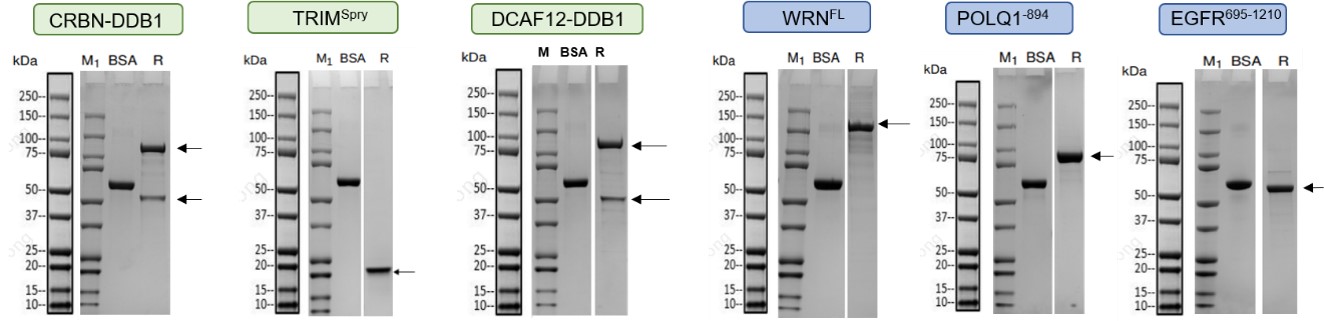
Figure 2 Proteins can be guaranteed (portion) in G
References
[1] Békés M, Langley DR, Crews CM. PROTAC targeted protein degraders: the past is prologue. Nat Rev Drug Discov. 2022 Mar;21(3):181-200. doi: 10.1038/s41573-021-00371-6.


 Most Popular Reagents
 Instruments
 Antibodies
 Protein Electrophoresis and Blotting
 Molecular Biology
 Stable Cell Lines
 Cell Isolation and Activation
 IVD Raw Materials
 Therapy Applications
 Resources