Background
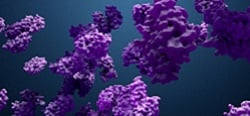
The spike protein (S protein) of SARS-CoV-2 has two subunits, S1 and S2. The receptor binding site (RBD) is located on the S1 subunit, forming the outer membrane surface of the virus in a trimer form and mediating SARS-CoV-2 binding to target cells and membrane fusion.
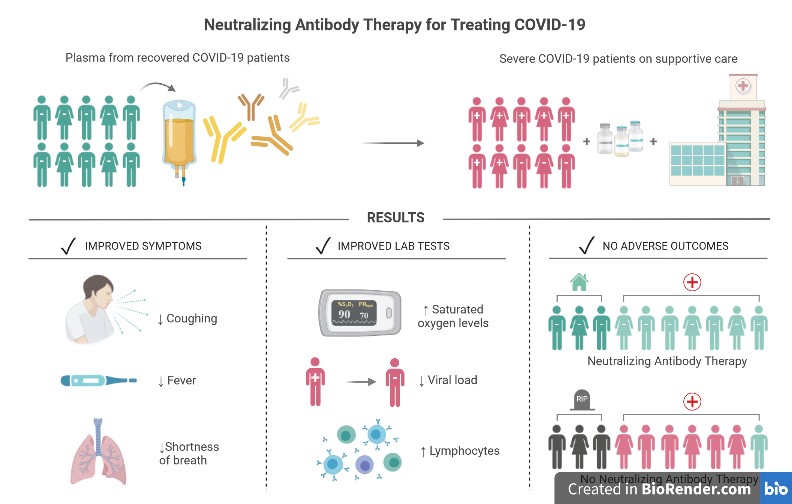
Created with BioRender.com
Neutralizing antibody therapy is one of the essential strategies to prevent SARS-CoV-2 infection and treat COVID-19 effectively. Most SARS-CoV-2 neutralizing antibodies target the RBD and N-terminal domain (NTD) of the S protein. However, mutations in the SARS-CoV-2 genome result in amino acid changes in the RBD and NTD that reduce or eliminate the effectiveness of vaccines and neutralizing antibodies. Thus, broad-spectrum that neutralize a wide range of variants are urgently needed.
The premise of broad-spectrum vaccine design is that the antigen has a broad-spectrum epitope with good immunogenicity and is sufficiently conserved. SARS-CoV-2 variant RBD often has more escape mutations, but the partial structure of the S protein may keep its amino acid sequence unchanged due to selection pressure. This conservative strategy is crucial to maintaining its quaternary structure and function.
Experiment and Result
Protective Neutralizing Antibodies
The researchers analyzed 10,480,461 SARS-CoV-2 sequences in the GISAID database. They identified three conserved regions of amino acid sequences with the potential to develop neutralizing antibodies (cold linearity), including the 814-838 amino acid sequence of the S2' cleavage site (FP), the 1142-1161 amino acid sequence of the heptapeptide repeat sequence 2 (HR2) and the antigenic epitope composed of subdomain 1 (SD1).
To determine whether neutralizing antibodies recognizing cold linear epitopes of FP and HR2 could respond to SARS-CoV-2 infection, the researchers evaluated 67 plasma samples from a convalescent cohort by enzyme-linked immunosorbent assay. The results indicated the presence of high titers of IgG antibodies binding to FP and HR2 cold linear peptides in convalescent individuals (peptides containing FP and HR2 coldspot sequences were provided by GenScript). These IgG antibodies were not detected in uninfected control samples, influenza virus-infected samples, and most individuals vaccinated against COVID-19.
Subsequently, the researchers isolated B cells specific for FP and HR2 peptides from individuals with high antibody levels in plasma by flow cytometry and obtained IgG heavy and light chain antibody sequences paired with FP and HR2 for the clonal construction of neutralizing antibodies.
ELISA test results showed that 10 of the 11 constructed FP antibodies and all 18 HR2 antibodies could bind to their antigenic peptides. Some antibodies showed broad-spectrum cross-reactivity and could bind to SARS-CoV-2 VOC, MERS, and HCoV -229E. Most FP antibodies recognize SARS-CoV-2 variants, and some HR2 antibodies cross-react not only with betacoronaviruses but also with alpha- and gammacoronaviruses.
The researchers then used SARS-CoV-2 pseudoviruses to assess the ability of the antibodies to neutralize SARS-CoV-2. FP antibody (fp.006) and HR2 antibody (hr2.016) showed good neutralizing activity. In addition, animal experiments also observed the protective effect of neutralizing antibodies before or after SARS-CoV-2 exposure. The results indicated that cold linear epitope-based FP and HR2 neutralizing antibodies effectively protect against SARS-CoV-2 VOC pseudoviruses and Omicron SARS-CoV-2 variants (genes of Alpha, Beta, Gamma, Delta, Omicron BA.1, BA.2, BA.2.75, BA.2.75.2, and BA.4/BA.5 were synthesized by GenScript).
Antibody fp.006
To further understand the recognition mechanism of fp.006, the researchers obtained the crystal structure of its Fab. FP has three amino acid residues (R815, E819, and F823) embedded in the complementarity-determining region (CDR), three grooves of the Fab segment to form hydrogen bonds, and hydrophobic interactions.
Among the 13 SARS-CoV-2 FPs with different antigenicity, most of the antigenic epitope residues contacted and recognized by fp.006 are highly conserved, which also explains the broad-spectrum neutralization ability of fp.006. ACE2 can induce a conformational change in the S protein, thereby exposing a highly conserved FP epitope, which is conducive to the antiviral effect of neutralizing antibodies.
Subdomain 1 Antibody sd1.040
SARS-CoV-2 S subdomain 1 (SD1) is adjacent to the RBD and has a relatively conservative sequence. To identify antibodies targeting SD1, the researchers utilized a flow cytometry-based strategy that combined the adverse selection of B cells binding to the RBD (amino acids 331-529) with the positive selection of those attached to the SD1-RBD (amino acids 319-591).
25 monoclonal antibodies were identified to bind to SD1-RBD, 16 among which have SD1 specificity.The best-performing broad-spectrum cross-reactive SD1 antibody in pseudovirus-based neutralization assays is sd1.040.
Bispecific Antibody CoV-X4042
Based on the broad-spectrum neutralization ability and synergistic effect of antibodies sd1.040 and rbd.042 on SARS-CoV-2 VOC, the researchers constructed the bispecific antibody CoV-X4042. Pseudovirus neutralization assays showed that CoV-X4042 was consistent with sd1.040/rbd.042, exhibited synergistic antiviral neutralizing activity. Furthermore, even if one of the parental antibodies fails (e.g., rbd.042 against Omicron BA.4/BA.5), the bispecific antibody still has neutralizing activity.
In vitro and in vivo protection experiments demonstrate that AAV-hACE2 mice treated with the bispecific antibody CoV-X4042 either pre-exposure or post-exposure to Omicron SARS-CoV-2 can maintain a decreased virus titer, verifying that bispecific antibodies targeting SD1 and RBD conserved epitopes can effectively fight against SARS-CoV-2 variants.
To further understand the recognition mechanism of fp.006, the researchers obtained the crystal structure of its Fab. FP has three amino acid residues (R815, E819, and F823) embedded in the complementarity-determining region (CDR), three grooves of the Fab segment to form hydrogen bonds, and hydrophobic interactions.
Among the 13 SARS-CoV-2 FPs with different antigenicity, most of the antigenic epitope residues contacted and recognized by fp.006 are highly conserved, which also explains the broad-spectrum neutralization ability of fp.006. ACE2 can induce a conformational change in the S protein, thereby exposing a highly conserved FP epitope, which is conducive to the antiviral effect of neutralizing antibodies.
Subdomain 1 Antibody sd1.040
SARS-CoV-2 S subdomain 1 (SD1) is adjacent to the RBD and has a relatively conservative sequence. To identify antibodies targeting SD1, the researchers utilized a flow cytometry-based strategy that combined the adverse selection of B cells binding to the RBD (amino acids 331-529) with the positive selection of those attached to the SD1-RBD (amino acids 319-591).
25 monoclonal antibodies were identified to bind to SD1-RBD, 16 among which have SD1 specificity.The best-performing broad-spectrum cross-reactive SD1 antibody in pseudovirus-based neutralization assays is sd1.040.
Bispecific Antibody CoV-X4042
Based on the broad-spectrum neutralization ability and synergistic effect of antibodies sd1.040 and rbd.042 on SARS-CoV-2 VOC, the researchers constructed the bispecific antibody CoV-X4042. Pseudovirus neutralization assays showed that CoV-X4042 was consistent with sd1.040/rbd.042, exhibited synergistic antiviral neutralizing activity. Furthermore, even if one of the parental antibodies fails (e.g., rbd.042 against Omicron BA.4/BA.5), the bispecific antibody still has neutralizing activity.
In vitro and in vivo protection experiments demonstrate that AAV-hACE2 mice treated with the bispecific antibody CoV-X4042 either pre-exposure or post-exposure to Omicron SARS-CoV-2 can maintain a decreased virus titer, verifying that bispecific antibodies targeting SD1 and RBD conserved epitopes can effectively fight against SARS-CoV-2 variants.
Reference
Filippo Bianchini, et al. Human neutralizing antibodies to cold linear epitopes and subdomain 1 of the SARS-CoV-2 spike glycoprotein. SCIENCE IMMUNOLOGY. 2023. DOI: 10.1126/sciimmunol.ade0958


 Most Popular Reagents
 Instruments
 Antibodies
 Protein Electrophoresis and Blotting
 Molecular Biology
 Stable Cell Lines
 Cell Isolation and Activation
 IVD Raw Materials
 Therapy Applications
 Resources