Duration: 5
min

Jeffery Shi
Protein and Antibody Product Marketing
Jeffrey Shi, Head of Protein and Antibody Product Marketing Team of Marketing
Department. He and his team are responsible for customer-centric development of full product
life cycle management for Protein and Antibody, and drive the sustainable development of the
protein antibody business.
Introduction
Antibody drugs are a class of biologics developed on the basis of antigen-specific recognition
ability and are widely used in the treatment of cancer, autoimmune diseases and infectious diseases. With their
high targeting, low side effects and long-lasting efficacy, antibody drugs have become an important part of the
biopharmaceutical industry and play a central role in the field of precision medicine. In recent years, the
global antibody drugs market has grown rapidly, driven by precision medicine developments, immunotherapy
breakthroughs, rising demand for high-incidence diseases, and biotechnology innovations. For example, the
successful application of immune checkpoint inhibitors (e.g., PD-1/PD-L1 antibodies) and bispecific antibodies
has revolutionized cancer treatment, while technological advances such as AI-assisted antibody design and Fc
engineering optimization have greatly enhanced the drugability and production efficiency of antibody drugs.
Meanwhile, the global regulatory environment tends to be optimized, with agencies such as FDA and EMA
accelerating the approval process of innovative antibody drugs and promoting the development of biosimilars,
further intensifying market competition.
In this article, we will delve into the antibody drug market development, technological
advancements and future
trends. From market dynamics to emerging technologies, we will examine the forces driving growth and shaping the
next generation of antibody therapeutics.
Global Antibody Drug Market Analysis: Market Size, Indications, and Competitive
Landscape
Table1. Overview of Antibody Drug Development
| Year |
Key Milestone |
| 1975 |
Köhler and Milstein developed hybridoma technology, enabling the stable production of monoclonal
antibodies (mAbs). |
| 1986 |
The first commercial monoclonal antibody drug, Muromonab-CD3 (Orthoclone OKT3), was approved by
the FDA for preventing organ transplant rejection. |
| 1990s |
Chimeric antibodies (Chimeric mAbs) and humanized antibodies (Humanized mAbs) were developed to
reduce immune rejection. |
| 2002 |
The first fully human monoclonal antibody, Adalimumab (Humira), was approved for rheumatoid
arthritis. |
| Post-2010 |
Antibody-drug conjugates (ADCs), bispecific antibodies (BsAbs), and nanobodies (Nanobody)
emerged as new antibody drug modalities. |
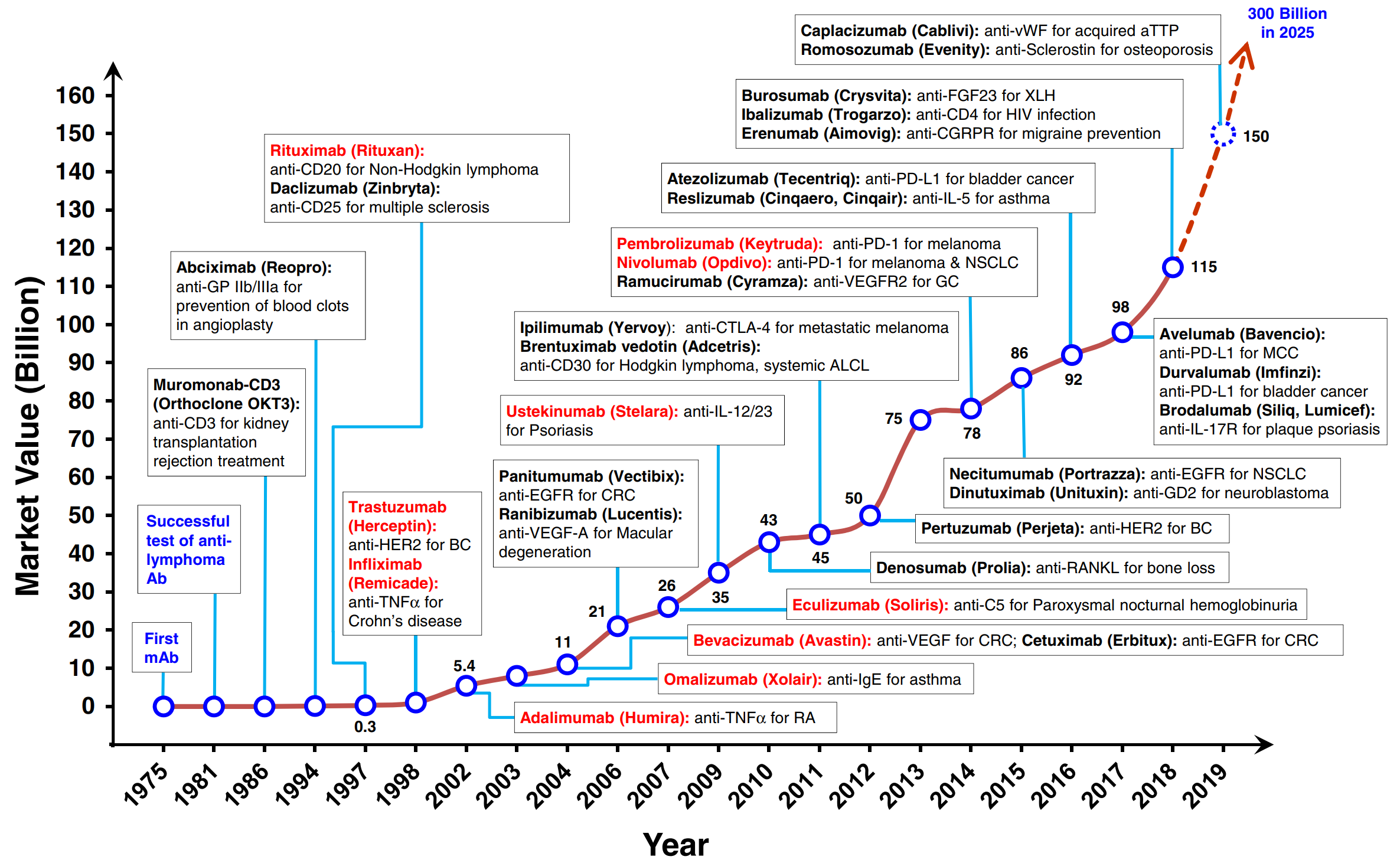
Figure1. Timeline from 1975 showing the successful development of therapeutic
antibodies and their
applications. The height of the line and numerical annotations represent the estimated market value of mAb
therapeutics in each indicated year (shown as billions of US dollars). Antibodies colored in red represent
the top 10 best-selling antibody drugs in 2018. Adapted from Lu RM et al., J Biomed Sci.
2020;27(1):1.
DOI:10.1186/s12929-019-0592-z[1].
In recent years, the antibody drug market has maintained strong growth, becoming a crucial segment
of the global biopharmaceutical industry. As of 2024, over 120 monoclonal antibody drugs were approved globally,
with more than 500 candidates in clinical trials. They account for a significant share of global biologics and
are projected to play a transformative role in personalized medicine.
Market Size
According to market research data from Grand View Research, the global antibody drug market
exceeded $200 billion in 2023 and is projected to sustain an annual compound growth rate (CAGR) of approximately
10%-12% over the next five years[2]. Keytruda Ranked No. 1 in Global Antibody Drugs Market with Sales
of $25.011
Billion by 2023. Antibody drug targets are absolutely dominated by PD-1/PD-L1 in terms of market share, with
combined sales of $46.3 billion. The antibody drug market rapid expansion is primarily driven by the widespread
adoption of cancer immunotherapy, the rising prevalence of autoimmune diseases, and continuous innovations in
antibody engineering technologies.
Table2. 2023 Global Antibody Drug Sales Ranking
| Brand Name |
Target |
INN |
Company |
Launch Year |
2020 |
2021 |
2022 |
2023 |
| Keytruda |
PD-1 |
Pembrolizumab |
Merck |
2014 |
143.8 |
171.86 |
209.37 |
250.11 |
| Humira |
TNF-α |
Adalimumab |
AbbVie |
2002 |
198.32 |
209.96 |
212.37 |
144.04 |
| Dupixent |
IL-4R |
Dupilumab |
Sanofi/Regeneron |
2017 |
40.45 |
61.98 |
86.81 |
118.5 |
| Stelara |
IL-12/IL-23 |
Ustekinumab |
Johnson & Johnson/Mitsubishi Tanabe |
2009 |
79.47 |
95.5 |
97.23 |
108.58 |
| Opdivo |
PD-1 |
Nivolumab |
Bristol-Myers Squibb |
2014 |
79.22 |
84.81 |
93.62 |
100.31 |
| Darzalex |
CD38 |
Daratumumab |
Johnson & Johnson |
2015 |
41.9 |
60.23 |
79.77 |
97.44 |
| Eylea |
VEGF |
Aflibercept |
Regeneron/Bayer |
2011 |
79.09 |
93.85 |
96.47 |
93.81 |
| Skyrizi |
IL-23 |
Risankizumab |
AbbVie |
2019 |
15.9 |
29.39 |
51.65 |
77.63 |
| Ocrevus |
CD20 |
Ocrelizumab |
Roche |
2017 |
46.29 |
54.58 |
65.39 |
73.95 |
| Entyvio |
α4β7 |
Vedolizumab |
Takeda |
2014 |
36.27 |
43.87 |
51.3 |
52.75 |
Table3. 2023 Antibody Drug Target Ranking
| Rank |
Target |
Sales |
Rank |
Target |
Sales |
| 1 |
PD-1/PD-L1 |
463.19 |
6 |
IL-4R |
118.5 |
| 2 |
TNFa |
260.94 |
7 |
IL-23 |
111.34 |
| 3 |
VEGF |
162.33 |
8 |
IL-12/IL-23 |
108.58 |
| 4 |
HER2 |
123.89 |
9 |
CD38 |
101.57 |
| 5 |
CD20 |
120.06 |
10 |
IL-17 |
78.9 |
Yi Yao Bi Ji. (2023, December 14). From PD-1 going global: Observing the second growth
curve of
China’s innovative drugs [Xueqiu column]. Xueqiu. https://xueqiu.com/4797094524/279576165.
Market Potential by Indication
Antibody drugs demonstrate strong market potential across multiple therapeutic areas, including
oncology, autoimmune diseases, infectious diseases, and rare diseases. According to Kaplon & Reichert (2023),
cancer immunotherapy (such as PD-1/PD-L1 monoclonal antibodies) remains the primary market driver, with immune
checkpoint inhibitors like pembrolizumab (Keytruda) and nivolumab (Opdivo) accounting for a significant share of
global antibody drug sales[3]. Furthermore, antibody therapies targeting rheumatoid arthritis,
psoriasis, and
multiple sclerosis, such as adalimumab (Humira) and infliximab (Remicade)—continue to expand their indications.
In recent years, driven by the COVID-19 pandemic, antiviral antibody drugs (such as neutralizing antibodies
developed by Regeneron and Eli Lilly) have also garnered substantial market attention.
Competitive Landscape
The global antibody drug market is dominated by large multinational pharmaceutical companies
alongside emerging biotechnology firms. According to a 2023 IQVIA Institute report, Johnson & Johnson (J&J),
Roche, Merck, and Bristol-Myers Squibb (BMS) remain industry leaders. Meanwhile, Regeneron, Innovent Biologics,
and Junshi Biosciences have rapidly gained market share by leveraging innovative immunotherapies, bispecific
antibodies, and antibody-drug conjugates (ADCs)[4]. Additionally, the Chinese antibody drug market
has
experienced remarkable growth in recent years. China's antibody drug market size increased from 9.8 billion yuan
in 2016 to 41 billion yuan in 2020 and is expected to reach 181 billion yuan by 2025.
Overall, the global antibody drug market remains in a phase of rapid expansion. Driven by
technological innovations, regulatory support, and increasing market demand, the sector is expected to
experience sustained growth in the coming years.
Classification of Antibody Drugs
Classification by Antibody Origin
Early antibody drugs were derived from mice, but due to strong immune reactions in humans, more
human-like antibodies have been developed. Based on their origin, therapeutic antibodies are classified into
four types:
Table4. Classification by antibody origin
| Type |
First Discovery |
First Commercial Product |
| Murine Monoclonal Antibody (Murine mAb) |
1975 |
1986, Muromonab-CD3 (Orthoclone OKT3) |
| Chimeric Antibody (Chimeric mAb) |
1984 |
1997, Rituximab (Rituxan) |
| Humanized Antibody (Humanized mAb) |
1988 |
1998, Trastuzumab (Herceptin) |
| Fully Human Antibody (Fully Human mAb) |
1990s |
2002, Adalimumab (Humira) |
The figure below shows how antibody structure evolved from fully murine to fully human: As human
content increases, immunogenicity decreases, improving drug safety and patient tolerance.
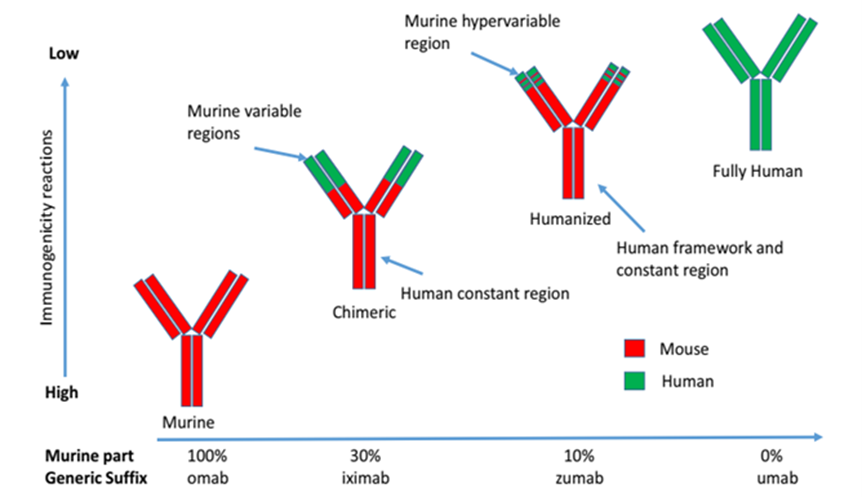
Figure2. Current clinical Pharmacology. Adapted from Singh, S et al., Current
Clinical Pharmacology, 13(2), 85–99. DOI: 10.2174/1574884712666170809124728[5].
Classification by Structural Characteristics
With advancements in antibody engineering technology, scientists have developed various innovative
antibody structures to enhance efficacy, optimize half-life, and improve targeting precision.
The following timeline (F3) shows the discovery and approval years of different antibody types:
Traditional Monoclonal Antibodies (mAbs)
Discovered in 1975, Muromonab-CD3 was approved in 1986 as the first marketed antibody drug.
-
Antibody-Drug Conjugates (ADCs)
Introduced in 1983, Gemtuzumab ozogamicin (Mylotarg) was approved in 2000.
-
Bispecific Antibodies (BsAbs)
Discovered in 1988, Blinatumomab (Blincyto) was approved in 2014.
-
Fc-Engineered Antibodies
Developed in 1993, Obinutuzumab (Gazyva) was approved in 2013.
-
Nanobodies
Discovered in 1993, Caplacizumab (Cablivi) was approved in 2018.
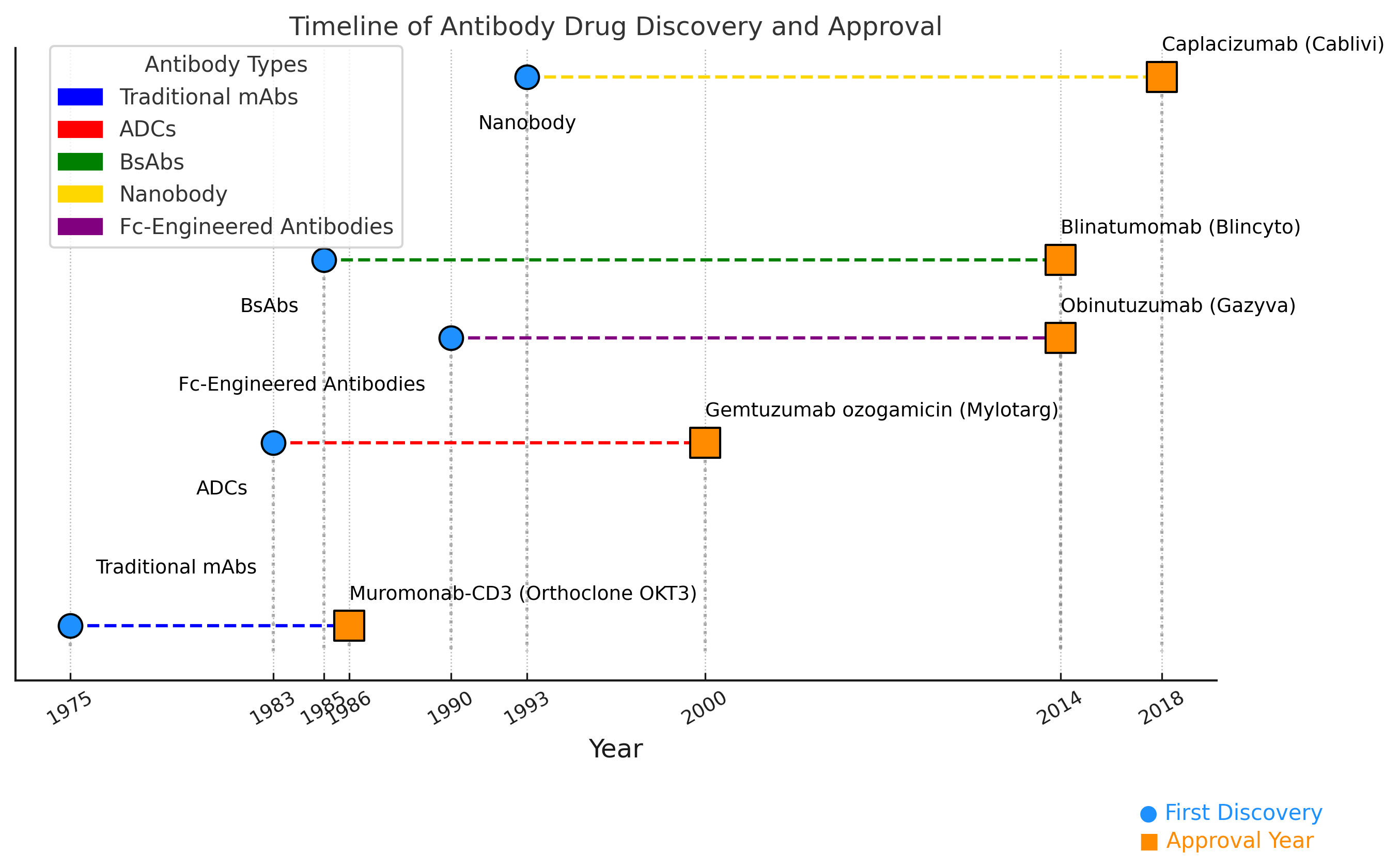
Figure3. Timeline of Antibody Drug Discovery and Approval
Antibody Drug Technology Innovation: R&D and Manufacturing
R&D Innovations
AI and Computer-Aided Antibody Design
Traditional antibody discovery relies on phage display or B-cell screening, but the introduction of
artificial intelligence (AI) and computer-aided drug design (CADD) has significantly accelerated key processes
such as antibody screening, affinity optimization, and stability prediction. For example, breakthroughs in
AlphaFold2 have greatly improved antibody-antigen interaction modeling, enabling rapid antibody structure
optimization and enhancing its drug-like properties[6]:
Representative Technologies/Applications:
- DeepMind AlphaFold2: Predicts 3D antibody structures, improving the efficiency of affinity
optimization.
- Atomwise AI: Uses deep learning to screen highly effective antibody candidates.
- Insilico Medicine: AI-driven antibody optimization, accelerating drug development.
Antibody Engineering Optimization: Fc Modification and Half-life Extension
- Fc Engineering: Optimizes the Fc region to enhance antibody-dependent cellular cytotoxicity
(ADCC) and complement-dependent cytotoxicity (CDC). For instance, antibodies with improved FcγR binding are
widely used in cancer immunotherapy.
- Half-life Extension: Engineering FcRn interactions can prolong antibody circulation time,
reducing dosing frequency[7].
Novel Antibody Molecular Designs
- Bispecific Antibodies (BsAbs): Simultaneously target two different antigens, enhancing
therapeutic
precision. Example: Blincyto (CD19/CD3) for leukemia treatment.
- Antibody-Drug Conjugates (ADCs): Combine monoclonal antibodies with chemotherapy drugs to
enhance anticancer effects. Example: Enhertu (HER2-ADC), which demonstrates superior tumor-killing potency.
- Nanobodies (VHHs): Single-domain antibodies derived from camelid species, with small
molecular size and high tissue penetration. Example: Caplacizumab, used for thrombotic thrombocytopenic
purpura (TTP).
Breakthroughs in Manufacturing Technologies
High-Efficiency Cell Expression Systems
Antibody drug production relies on stable cell expression systems, with Chinese hamster ovary (CHO)
cells remaining the most commonly used platform. However, recent optimizations have improved efficiency:
- High-Yield CHO Cell Line Engineering: Techniques such as CHO-turbo systems and
CRISPR-mediated gene editing
have significantly increased antibody yield.
- Transient Expression Systems: Boost short-term production efficiency, particularly useful
for preclinical
research, such as HEK293 cell-based expression.
Smart Biomanufacturing and Continuous Production
- Perfusion Culture Systems: Reduce batch-to-batch variability and improve production
consistency.
- Automated Purification Technologies: Innovations such as single-column affinity
chromatography and multi-column chromatography increase antibody purity and yield.
- AI-Driven Digital Manufacturing: Implementation of real-time process analytical technology
(PAT) for quality control, ensuring higher production stability.
Cost-Effective Production Technologies
- Plant-Based Expression Systems: Using tobacco leaf platforms to produce antibodies, which
improves efficiency while reducing production costs.
- Microbial Expression Systems (E. coli, Pichia pastoris): Suitable for the production of
antibody fragments
(Fab, scFv).
Future Trends in Antibody Drugs
The development of antibody therapeutics is progressing towards higher efficiency, greater
precision, and improved safety. From antibody engineering, bispecific antibodies, and ADCs to integration with
gene and cell therapies, antibody drugs are set to remain dominant in the biopharmaceutical industry.
Additionally, advances in manufacturing processes will facilitate the wider clinical application of antibody
drugs, benefiting more patients worldwide.
References & Data Sources
[1] Lu, R. M., Hwang, Y. C., Liu, I. J., Lee, C. C., Tsai, H. Z., Li, H. J., & Wu, H. C. (2020).
Development of therapeutic antibodies for the treatment of diseases. Journal of Biomedical Science, 27(1), 1.
https://doi.org/10.1186/s12929-019-0592-z.
[2] Grand View Research. (2023). Monoclonal antibodies market size, share & trends analysis report,
2023–2030. Grand View Research.
https://www.grandviewresearch.com/industry-analysis/monoclonal-antibodies-market.
[3] Kaplon, H., Crescioli, S., Chenoweth, A., Visweswaraiah, J., & Reichert, J. M. (2023).
Antibodies to watch in 2023. mAbs, 15(1), 2153410. https://doi.org/10.1080/19420862.2022.2153410.
[4] IQVIA Institute. (2023). Global oncology trends 2023: Innovation, expansion, and disparities.
IQVIA.
https://www.iqvia.com/insights/the-iqvia-institute/reports-and-publications/reports/global-oncology-trends-2023.
[5] Singh, S., Tank, N. K., Dwiwedi, P., Charan, J., Kaur, R., Sidhu, P., & Chugh, V. K. (2018).
Monoclonal antibodies: A review. Current Clinical Pharmacology, 13(2), 85–99.
https://doi.org/10.2174/1574884712666170809124728
[6] Jumper, J., Evans, R., Pritzel, A., Green, T., Figurnov, M., Ronneberger, O., Tunyasuvunakool,
K., Bates, R., Žídek, A., Potapenko, A., Bridgland, A., Meyer, C., Kohl, S. A. A., Ballard, A. J., Cowie, A.,
Romera-Paredes, B., Nikolov, S., Jain, R., Adler, J., ... Hassabis, D. (2021). Highly accurate protein structure
prediction with AlphaFold. Nature, 596(7873), 583–589. https://doi.org/10.1038/s41586-021-03819-2.
[7] Wang, X., Mathieu, M., & Brezski, R. J. (2018). IgG Fc engineering to modulate antibody
effector functions. Protein & Cell, 9(1), 63–73. https://doi.org/10.1007/s13238-017-0473-8.


 Most Popular Reagents
 Instruments
 Antibodies
 Protein Electrophoresis and Blotting
 Molecular Biology
 Stable Cell Lines
 Cell Isolation and Activation
 IVD Raw Materials
 Therapy Applications
 Resources