









































The role of Tau proteins in Alzheimer's Disease
Beta-amyloid peptides compose the amyloid plaques of AD and are the result of improper processing of the amyloid precursor protein (APP). Secreted by all neurons, APPs in AD patients undergo two abnormal cleavages resulting in the creation of toxic C-terminal beta-amyloid peptides. First, APP (770 aa in length) is cleaved by the enzyme beta-secretase, resulting in a 99 aa long peptide fragment. This fragment is then cleaved by another enzyme, gamma-secretase, resulting in 38 to 43 aa long beta-amyloid peptides. Of these peptides, beta-amyloid (1-42) exhibits the most amyloidogenic properties and is the principal component of amyloid plaques. Beta-amyloid peptides self-assemble into stacks of ordered parallel beta sheets as they form the plaques of AD.
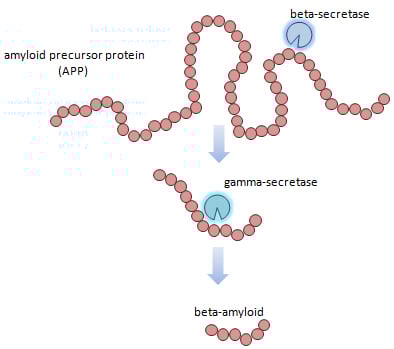
The genetic origin of beta-amyloid formation stems from mutations in the APP gene, or one of two versions of the presenilin genes (PSEN1 or PSEN2) that result in the overproduction of APP. Duplication of the APP gene results in excess APP production as well. Increased amounts of beta-amyloid correlate with AD progression.
Beta-amyloid peptides in Alzheimer's Disease fundamental and therapeutic research
Beta-amyloid peptides are useful for numerous research projects including:
- The study of beta-amyloid peptide self-assembly mechanisms.
- The study of interactions between beta-amyloid and other proteins or peptides involved in amyloid plaque assembly.
- The identification of drug molecules that inhibit beta-amyloid peptide self-assembly.
- The development of beta-amyloid peptides as vaccines that result in the clearing of amyloid plaques by the immune system.