List by Alphabet: A B C D E F G H I J K L M N O P Q R S T U V W X Y Z

DNA handling

Introduction

DNA handling refers to the set of practices and techniques used for the safe and effective manipulation, storage, and analysis of DNA in a laboratory setting. Proper handling is crucial to maintain DNA integrity, prevent contamination, and ensure accurate experimental results. These practices are essential for various molecular biology applications, including cloning, PCR, sequencing, and genetic engineering.

Key Principles of DNA Handling

Preventing Contamination

  • Use of Sterile Equipment: Always use sterilized pipette tips, tubes, and gloves to avoid introducing foreign DNA or nucleases that could degrade samples.
  • Dedicated Workspaces: Maintain separate areas for DNA extraction, PCR setup, and post-PCR analysis to prevent cross-contamination.
  • Aseptic Techniques: Regularly clean work surfaces with ethanol or DNA-degrading solutions.

Protecting DNA Integrity

  • Temperature Control: Store DNA at optimal temperatures—short-term at 4°C and long-term at -20°C or -80°C to prevent degradation.
  • Avoiding Repeated Freeze-Thaw Cycles: Repeated cycles can shear DNA and reduce sample quality. Aliquoting samples helps minimize freeze-thaw damage.
  • Use of Protective Buffers: Add EDTA-containing buffers to inhibit nuclease activity and maintain DNA stability.

Minimizing Physical Shear

  • Gentle Pipetting: Avoid harsh pipetting or vortexing, as these can shear longer DNA fragments.
  • Slow Handling of High-Molecular-Weight DNA: Use wide-bore tips for transferring genomic DNA to reduce shearing and maintain fragment size.

DNA Storage Conditions

Temperature Recommendations

  • Short-Term Storage: DNA can be stored at 4°C for up to a week for routine use.
  • Long-Term Storage: For long-term preservation, store DNA at -20°C or -80°C in a buffer (e.g., TE buffer) to maintain stability.
  • Avoiding Frost-Free Freezers: Store DNA in manual defrost freezers to prevent degradation from thaw cycles associated with automatic defrost systems.

Buffer Composition

  • TE Buffer (Tris-EDTA): Commonly used for DNA storage as it provides a stable pH environment and the EDTA chelates divalent cations to inhibit nucleases.
  • Water: Ultra-pure, nuclease-free water can be used for DNA storage but may not offer the same protection against degradation as buffered solutions.

Common Practices for DNA Handling

Pipetting and Transfer Techniques

  • Use Low-Binding Tips: Prevent DNA from sticking to pipette tips and tubes by using low-binding or siliconized plastics.
  • Avoiding Air Bubbles: Handle DNA solutions carefully to avoid introducing bubbles, which can shear DNA or lead to inaccurate measurements.

Preventing Degradation

  • Use of Nuclease Inhibitors: Incorporate nuclease inhibitors in buffers or solutions to prevent degradation from accidental nuclease exposure.
  • Wear Gloves: Always wear gloves to prevent contamination from nucleases on the skin.

Quantification and Purity Checks

  • Spectrophotometric Analysis: Use a spectrophotometer (e.g., Nanodrop) to measure DNA concentration and purity. An A260/A280 ratio of ~1.8 indicates pure DNA.
  • Fluorometric Assays: More sensitive than spectrophotometry and can detect low concentrations of DNA without interference from RNA or protein contaminants.

DNA Handling in Specific Applications

PCR and Cloning

  • Template Quality: High-quality, intact DNA is essential for successful PCR amplification and cloning efficiency.
  • Preventing Contaminants: Use PCR-grade water and reagents to minimize contamination risks that could lead to false positives or degraded templates.

Sequencing

  • Fragment Length: High-quality sequencing requires DNA of appropriate fragment length, which can be ensured by gentle handling and proper storage.
  • Purification: Clean DNA with purification kits or ethanol precipitation to remove contaminants that may affect sequencing accuracy.

Gene Editing

  • Integrity for HDR Templates: DNA used in homology-directed repair (HDR) should be intact and free of contaminants to maximize editing efficiency.
  • Ensuring Sterility: Maintain sterility throughout handling to prevent unintended mutations or reduced efficiency in genome editing workflows.

Best Practices for DNA Handling

Labeling and Documentation

  • Proper Labeling: Clearly label all tubes and containers with sample ID, concentration, and date to avoid mix-ups.
  • Detailed Documentation: Maintain a logbook or digital record of DNA handling procedures, storage conditions, and concentrations for reproducibility.

Handling Large DNA Molecules

  • Avoid Harsh Treatments: For long DNA molecules like genomic DNA or BACs (bacterial artificial chromosomes), avoid centrifugation at high speeds.
  • Specialized Containers: Use tubes designed for minimal shearing, such as those with smooth surfaces or made from low-binding plastics.

Challenges in DNA Handling

Nuclease Contamination

  • Source: Can come from reagents, laboratory surfaces, or human contact.
  • Mitigation: Use nuclease-free reagents and routinely clean equipment and surfaces with DNA-decontaminating agents.

Shearing of High-Molecular-Weight DNA

  • Challenge: Maintaining the integrity of long DNA fragments can be difficult with standard pipetting and handling.
  • Solutions: Employ pipetting techniques that reduce mechanical stress and use slow, controlled mixing methods.

Long-Term Stability

  • Degradation Over Time: DNA samples can degrade over extended storage periods, even at low temperatures.
  • Protective Measures: Regularly check DNA integrity using gel electrophoresis or concentration assays, and re-aliquot samples if necessary.

Future Directions in DNA Handling

Advanced Storage Solutions

  • Room-Temperature Stabilization: Development of chemical stabilizers that allow DNA to be stored at room temperature without degradation.
  • Cryoprotectants: Research into cryoprotective agents that further enhance long-term DNA stability.

Automation and Robotics

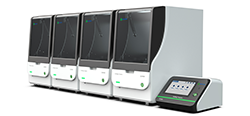
  • Automated Handling Systems: Robotic systems can reduce human error and contamination by standardizing DNA handling procedures.
  • Integrated Workflows: Systems that automate extraction, quantification, and storage are being developed for seamless DNA management.

Nuclease-Resistant Containers

  • New Materials: Use of materials resistant to nucleases to further prevent contamination and degradation during storage and transport.

GenScript Services and Products

GenScript supports DNA handling and research with:

Conclusion

Proper DNA handling is essential for maintaining sample integrity, preventing contamination, and ensuring reproducibility in molecular biology experiments. By following best practices for storage, transfer, and protection against nuclease degradation, researchers can maximize the quality and reliability of their DNA samples. Advances in automation and new storage technologies continue to improve the efficiency and stability of DNA handling processes.


Related Biology Tools

  • GenSmart™ Codon Optimization

    GenSmart Optimization is a free online tool for performing codon optimization to improve gene expression. GenScript's patented algorithms are integrated into the tool to optimize the computing capability of high-performance sequence generation.

    Learn More

  • DNA Construct Design Tool

    GenSmart™ Design is a free online DNA construct design tool developed by GenScript. GenSmart™ Design has two design modules, the Create Construct module for individual plasmid design and the Create Library module for DNA library design.

    Learn More

  • Codon Frequency Tables

    This online tool shows commonly used genetic codon frequency table in expression host organisms including Escherichia coli and other common host organisms.

    Learn More

Service and Products

Gene Synthesis

Offer gene synthesis of 100% sequence guarantee, free codon optimization, DNA synthesis in as fast as 4 days.

ORF cDNA Clones and Custom Clones

Largest commercial ORF clones database, 70,000 next-day shipping ORF clones.

Plasmid DNA Preparation

High quality plasmids supported by fully-automated platform, 100% full insert sequence accuracy guaranteed.

Express Cloning & Subcloning

$49 and 2 day turnaround, choose from over 150 IP FREE vectors.

Mutation and Library Services

Mutagenesis Portfolio offers several mutation and library services to meet various customers’ needs.

Oligo Synthesis

Bridge the gap between chemically synthesized oligos and bological applications.

If you know of any terms that have been omitted from this glossary that you feel would be useful to include, please send detail to the Editorial Office at GenScript: [email protected]

If your term is adopted, we will send 1,000 EzCoupon points to your GenScript account.